A Very Long Discourse on Cliches, Tea, Names, Getting Older, Hair Color, and of course, My main Man, Jesus
April 18, 2015
By Jane Tawel
I have come up with a fun game. Okay, it is a fun game if like I, you are a nerdy word person. What you do is, you think of a cliché that describes you or your family, and then you write about why it describes you. Ready? Here goes –
- “A Rose by Any Other Name”. When I was in my self-obsessed twenties, I decided to finally act on my hatred of my plain Jane name and change my name to Caitlin, which at the time was completely unique. The joke was on me as the name Caitlin or Katelyn became the most popular girl’s name for about the next decade in America. Meanwhile the name Jane was seldom heard anymore. Changing my name did not change me, or make me more or less special. Some of my friends though still call me Cait, and that makes them special to me.
My husband has lived in opposite world in terms of his names. Jane Cook met Raoul Tawel and a new unique world began and soon exponentially multiplied to include a passel of unique little Tawels. I wanted to give each of my children unique and special names. Someone once suggested with a last name like ours we should have just named them all “Terry”.
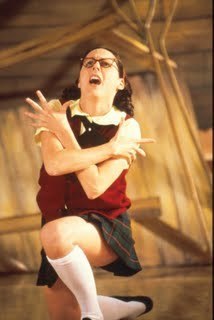
- “Old enough to know better”. I am trying to find ways to adjust to how old I am and who that makes me. I think I have a difficult time growing old because I am basically an immature person. I have decided in a radical act of feminism and some obscurely personal sense of Jesus-ism to let my hair color grow out and go grey, but this is difficult not only because as my orange hair grows out, I look like this —

but because pretty soon I will look like this —

People in America (and definitely folk living in Los Angeles, America), are very prejudiced against old women. I have spent several years deluding myself that blonde hair essentially tricks people into thinking I am still twenty-five. I assume I will look more unique when I grow grey in the LaLa Land of “She’s the blonde one, no not that one, no not that one, nope, not that one either.
Old men do not need to worry about POO (Prejudice Of Oldsters) because old men still rule the world. When we lived in Glendale, I once commented to Raoul’s Armenian hair cutter, “Esther, My husband has great hair”. Esther, not quite understanding my strong Midwestern accent and ever protective of the male species, thought I said “My husband has GRAY hair”. She vehemently lit into me, “No, yoor hoosband has beeeoootiful Seelver hair. Eet ees not grrrrray! Eet ees seelver!”
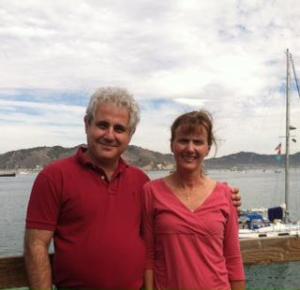
I can bet you 50,000 Armenian drams that when and if Esther ever sees me again, she will not call my grey hair, beeeeeoooootiful and seeeelver! For Esther like so many others, I will be that old grey haired lady. It doesn’t matter that Esther is quite a bit older than I, she still dyes her hair. So it doesn’t count.
Now maybe if I were Jamie Lee Curtis or Emmie Lou Harris I would be “seelver” haired and still hot. But I don’t know who I am as a woman if I am not sexy, cute, pretty, and thin/blonde/wrinkles-less. How do I relate to other people?
My daughter Verity tells me that it is trendy now for young people to dye their hair grey. Well, when you are young, you can dye your hair blue, grey, purple, construct a dress out of a paper bag paired with black tights, and wear banana peels for shoes and you still look cute, pretty and sexy. When you are not young, you are no longer admired for how you look so much as how you manage. The five life stages of looking good: 1. Look good buck-naked. 2. Look good in a bikini. 3. Look good in jeans. 4. Look good in loose fitting clothing or Muumuu’s. 5. Look good in a casket.
As for me, I am trying to figure out who that person in the mirror this morning is going to be when she grows up. Hopefully pretty soon I will not just be old and grey and slack, but I will truly be old enough to know better.
- “Too big for her britches” This is what my skinny jeans said to me this morning.
- “Doing it by the book” This is always true for me as I refuse to watch the movie.
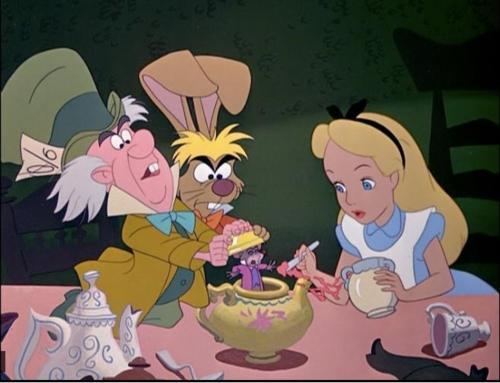
- “Not everyone’s cup of tea”. If you came to the Tawel household and observed our family’s afternoon tea making ritual, you would see six different kinds of cups, with six different types of teas, and six different amounts of milk / sugar / or honey in them. The “Tawels Six” are just kinda hard to group or standardize. I remember a friend remarking after a Tawel party once, “you have very eclectic friends.” I think this was meant to make me feel better after the argument that escalated almost to physical blows at the party between some of our said “eclectic” friends. Actually, the next time we hosted a party, both of the arguing friends wanted to make sure the person of the other political persuasion was not going to be there.
The Tawel family has been called “different”. Synonyms for the word “different” include: contrasting, offbeat, particular, peculiar, colorful, a far cry from, odd, otherwise, unalike, mismatched, like day and night…”

`Having grown up in the somewhat homogenous Middle West, where we were if not in fact all a lot alike, we were expected and groomed to be alike, I was overjoyed to realize that each of my four children came into the world incredibly different from each other and absolutely unique. They are each “their own cup of tea”. I am also more and more thankful for the family and friends who have learned to enjoy and sometimes love the “Tawel Teas”. Thank you. I know we are not everyone’s cup of tea. Especially Caitlin.
I hope you have fun playing “The Cliché Game” with your significant others. (Currently in Trademark negotiations with Some Very Important Persons.) (That is a lie.) Be careful though; I have found that very few in my close circle of Tawels are happy with the clichés I assign us. Your family may feel the same. No one wants to be a cliché, which is why the game is more about redefining your clichés than living into them. Cliches, as a rule, should not be a guide for writing your life story.
The number one rule of a good writer, is “Don’t write in clichés”. The second rule is write vivid characters. Where we sometimes go wrong with our lives and maybe where we have gone wrong with God is in wanting to keep His words and The Word, Jesus, and our stories as humans, in safe little clichéd compartments.
We tend to cliché God when we are justifying something we have done or when we are arguing against something we don’t like. For instance, when we don’t want to see sin as sin, or when we are too afraid to speak the truth in love, or too lazy to fight for something worth fighting for, we cliché God by saying, “God is Love”. But if you read life stories about real people like Ananias and Sapphira, or Lot, or Moses, or the early Hebrews, or how The Father’s love looked with God’s only begotten Son, you have to come to the conclusion that we cannot compare God’s love to anything remotely clichéd about Love.
If you are so angry you could smite someone and therefore, you box God into the “God is a Just God” box, then you better take a hard look at God’s weird and radical kind of justice. Take Adam and Eve, or King David, or Cain, or Peter or Paul for instance.
If I am trying to make God into a cliché, then I am making Him into the god of my desires and that is worshiping a false idol. The God of the Bible, of the created universes, of the sun and the stars and the flowers and the elephants and the ants, and the God of you and me, is a God so unique we will need eternity to begin to understand one little quark of who He is. It is why immersing ourselves in His story is so important.
Living, like writing, has rules. If we follow the instructions, we make the story of our lives Good. Just like God when He is creating, we want to look at the unique but well ordered creation of a life well lived and say, “It is Good.”
The Bible is full of characters who have followed the instructions and allowed God to help them write the story of their lives. The first rule of living in The Good Book, is “Love God for who He is and not as the cliché you wish He were”. The second rule is like unto it, “Love your neighbors (spouse, child, boss, friend, enemy, self) as the vivid characters they are and not as the clichés you would like to make them, and do this in the same way you want to be loved for the person you uniquely are”. Because (even though I’m breaking a grammar rule here)– Nobody is not God’s cup of tea.

We are all made in God’s image, hence, there are no human clichés. But that makes for some hard choices in life as we deal with other humans. It means everyone is worthy of grace. That terrorist is worthy of redemption because he is not a clichéd “terrorist”. He is a singular human being that God created and that our non-clichéd God, loves. Hard to stomach? Yes, it is. I am personally terrorist intolerant and have a hard time digesting God’s word on how to love my enemy. But reread the Tanahk – nothing older or newer about God’s Truth.
We have gotten so good at isolating ourselves with gadgets and gates and isolating “the other” with prejudice, anger and fear. We have become the ones who walk away from and pay for the good Samaritan services of someone else. But in guarding our societies and denominations, we have stopped seeing each other as the eternally confounding special souls that each human is. That homeless person is not a clichéd bum, but a child of the Unique God, Yahweh. That Wall Street stockbroker is not a money changer but a little girl who needs a Daddy. That nation of individuals will someday get the justice it deserves because it is not a clichéd super power but because it is a group of individual souls who will be judged by the cliche-bending King who rode a donkey and died on a cross for His worthless subjects. God took worthless dust and made it into worthy sons and daughters of God. The Triune Godhead has worked throughout history to make men and women write the stories we are worthy of living because we are created to be like He is — special. If we choose violence, and hatred, and evil, and indifference, we are the ones who choose to be common, not special. “For men love darkness”, but God has called us to come into the light and stand out as super stars.
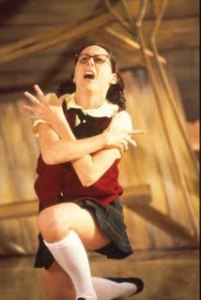
God was and is so absolutely unique that Moses (talk about an idiosyncratic person!), had to ask God about Himself, “Okay, god of my peeps the Israelites, who You be, dude? I mean, like, nameless god, like, okay, I’m going to Egypt where the gods have cool names that describe them, like Ra = Sun god, and Aah = Moon god, and Ishtar = god of war and sexuality (that should have told the Egyptians something right there, same god for both of those?!?!?!) But you, oh god of my homies the Hebrews, what choo be da’ god of, man?” “So”, Moses says to his god, “what’s your name?”
I honestly think Jehovah, God must have been laughing His head off (a really bad cliché for God, okay, but you get the picture). I mean, God was stumped, He’s thinking, like, “How do I tell this guy. I don’t really have even anything like what this human considers a “name”. I mean, I’ve never been put in this position before. Adam and Eve, nope, they didn’t need a name. Abraham, he was good living outside the clichéd names. But Moses, wow, for someone who doesn’t even plan on doing the talking, this guy wants a name?!”
But God is Love, the weird kinda love that answers Need if not necessarily Want, and so God lovingly answers His creation’s need and gives Moses a name. God reaches down to Moses’ level and levels with the human as best in His infinitude that God can. “Yo, Mo-mo, Catch this, my man. Y’all can tag Me, “I Am”.
Try to cliché that answer, folks.
I love it. Moses goes up against a list of named gods like nobody’s business. I mean those Egyptians had gods not just for big clichés like justice, war, destiny, and joy, but they had gods for cats, frogs, and cows. They actually had two different gods’ names for hippos, go figure! Okay, I can’t help it, they had a centipede god called Sepa. Worship that god and see how far that gets ya’, okay? (I call on the great god Centipede to save me from my sins and to cure cancer!) So off go Moses and Aaron to the Egyptians, and they are like, “Okay we aren’t doing the tit for tat thing here. Youse guys got a thousand named gods, and we’re like totally bringing to the table, one god…. Who…. okay, uh, uh, um (Moses starts his nervous stutter thing here so he looks at big bro Aaron, who kinda shrugs not feeling his game yet.) um, uh, okay, bear with me here, (Aside: thanks a lot Aaron). I DID ask Him for His name, and here it is, ‘kay? Ready. You can call our Hebrew god, “I Am”.”
Those Egyptians were laughing their heads off…..all the way til the frog gods started falling from the sky and the war gods killed all the firstborns. They were laughing til the centipede gods started crawling in their cat gods’ kitty litter. The Egyptians were living the clichéd good life all the way until the Hebrew slaves got outta Dodge and the “river ran through it (them)”.
Then “ I Am” didn’t seem so quaint.
I Am. When you share your name with someone, you are no longer a stranger. Knowing someone’s name gives you a piece of the puzzle of that person. When Jehovah, gave us a name, He gave us an endless paradox. On the one hand, I Am elevated Himself beyond any words that could describe who He is. But He also humbled Himself, by stooping to our need and using our language so we could have a miniscule understanding of His essential self. In the same way God would later humble Himself and give Himself the name, Jesus.
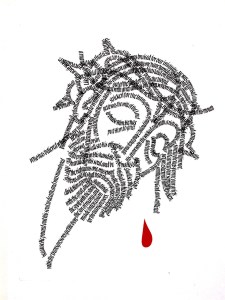
The name Jesus wasn’t unique back then but was sorta like naming your kid, Bob. Or Jane. But Jesus never needed to reinvent Himself because He knew His unique place in God’s story. The name Jesus means “God Saves”. As the present body of Christ, we also bear the name “God Saves” when we call ourselves “little Christs”. We are the little “anointed ones” to live in the unique image of Jesus. No matter what we are called; no matter what our talents are; no matter what our inborn personality; no matter what our ingrown problems; we are created especially in God’s one- of- a- kind- in -each -of -us image. That’s how big Yahweh is.
The Great I Am decided against all odds, not hedging His bets, taking one for the team, going the long way around, going the distance, (get it? Clichés?) – He chose to not only trust His creation with Himself but to trust his created people with telling His Story through our own broken, special lives (Yeah, special as in Special Needs every one of us!). God entrusted us with His image and His story, even though we had time and time and time and time and time and time and time again, proved ourselves untrustworthy. And because The Great I Am has trusted us with His essential self, one of the commands that is given to teach us how to write our life stories well, is the instruction that we should not abuse the power, the grace, the mystery, or the love of the name of I Am. That is what the Egyptians do, not Yahweh’s chosen Bride. I use God’s name in clichéd vain to my peril and also to my loss.
There are very good rules given in the most un-cliched book ever written —Rules for good writing in the individual soul and on the world’s collective soul. Jesus came as The Word. We humans had already tried over and over again to make God and His Story, a list of mealy-mouthed clichés. So Jesus came to live our story as it is meant to be lived. Jesus lived a God-as-protagonist life and preached the Good News of new metaphors; metaphors turned upside down to illuminate the objects around us and reveal The Image in each of us. And God took a new name to give us what we Need and ultimately what we Want. When God took the name Jesus, He knew that though it might seem to be a pretty common name, some day at that unique name, every knee will bow.
Each day I have to ask myself, am I playing The Cliché Game? Am I taking the easy clichéd way out? And I don’t just mean my writing. I mean my life. If I am made in I Am’s image, Am I living a life in which being and beings are more important that doing and doings? Or am I living a cliché?

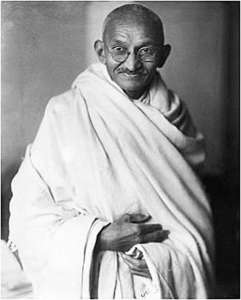
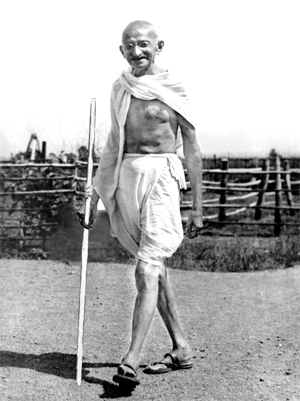
If you really want to be unique, be a person of Hope. You know the difference between Joe Schmoe and the great world changers? World changers have hope – usually against all odds. People who have hope in Someone bigger than their common-ness re-make the world in His holy image. When the rest of the world has chosen defeat or violence or hiding in fear or racism or hatred or disinterest, the hopeful ones like Abraham, Joshua, Joseph of Egypt, Ruth, Esther, Ghandi, Martin Luther King, Schindler, ten Boom, Mother Teresa, John Wesley, — those kind of people choose hope. Then they just keep putting one hopeful foot in front of the other until the miraculous occurs. These heroes of hope, believe that the world despite all appearances to the contrary, might change; hope heroes keep the hope alive that the world can be re-newed. That is the uniqueness that hope brings. Otherwise these extraordinary people who become the peaceful, healing hopers of history, are no different than you and I; they put on their pants one leg at a time just like you and I do. Well, all of them except maybe Ghandi. This is Ghandi wearing pants:

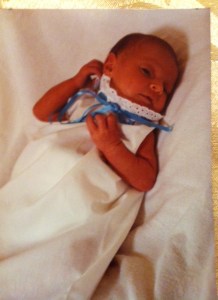
Side note: My first born Justine sort of looked like Ghandi when she was born. She had jaundice so she had Ghandi’s skin hue for a while and her limbs were kinda spindley and she was pretty bald: Seriously,Can you tell which of these pictures is of Ghandi and which is of Justine? I can’t.
How unique would I be in this world if I were a person of hope? Imagine how Hope could change your life? Apply hopefulness rather than hatred to your attitude about your job. Apply hope to your relationships. Apply hopefulness instead of criticism to your church. Apply Hope to your children. And if you can’t apply hope, then walk the opposite way. At least for a little while. I mean it, if you aren’t able to hope in that situation, then get out of it. Let someone else who is uniquely gifted to apply hope there, barge in, while you go find what you are uniquely called to apply hope to. You may have to isolate yourself on a figurative mountaintop for a while to restore hope, but do it. Unlike Love or Faith, there is nothing you can do or must do. Hope is like a bird – don’t try to catch it and don’t ask it to teach you to fly. Find your sense of hope in the Lord of Lords and King of Kings, and use it for Good. Only then can the prophet Isaiah’s word be true in your life; only then can you run again without fainting and maybe even fly. But those who hope in the LORD will renew their strength. They will soar on wings like eagles; they will run and not grow weary, they will walk and not be faint. (Is. 40:31)

Emily Dickinson, never one for clichés wrote a great poem about hope. As I get older, hope has had to take on a different hue, just like my hair. I no longer “hope” for A’s or that “the guy” will call, or that I will get the “thing”, or that I look hot, or that “they” will choose me. Hope is no longer a possibility based on the chimera of the stuff of youth. I am old enough to know better. Of course, if I were a revered wise elder, what I would tell the young people is: Even when you are as young as you are, my darlings, Hope doesn’t depend on anything you are or can do. Hope is the thing with feathers.
There is an old hymn with a metaphor that never grows cliched: “My hope is built on nothing less than Jesus’ blood and righteousness. I dare not trust the sweetest frame but wholly lean on Jesus’ name. On Christ the solid rock I stand, all other ground is sinking sand; all other ground is sinking sand.”
What foundation am I building my life upon? Am I building it on the same clichéd foundation that this world of more -of -the- same super corporation brand names is building it on in order to have a prefabbed life behind a security gate? Or am I building a life on the Kingdom Rock, in order to be constructed by the Master Builder strong enough to last for eternity.? Am I longing to be that uncommon, peculiar person whose life is a metaphor in the making?
Jesus took common things and blessed them. He offers to take common old Jane, common old Amy, common old Verity, common old Susy, common old Raoul, common old Bill, common old Caitlin, common old us, and make us something special. God laid down His extraordinary life so that the theme of my story could be built around the common Son of man with a common name who shed his common blood to save common cliched old me. When I make my story, His story, then life is Pulitzer Prize Beautiful. Hope in the Christ, means a life in which ashes are exchanged for beauty, and in which normal is exchanged for extraordinary. And grey becomes great.

I hope that with age, will come the wisdom and hope that I need to trust that if God can love and delight in the wonderment of a common, useless bird, then He loves me enough to take the clichés of my life and write His unique story in the margins. It may not look like much to any one else; it may not seem like much to me, but I pray I am old enough not to know any better and to hope in the “things unseen”, unimagined! that God is doing in the world and has in store for the rest of my eternal years.
Living well at any age is not about looking forward to shedding this corporal body and going to heaven to be with Jesus; it is about enjoying today spent living in Christ’s kingdom on earth as it will be and is in heaven. We are called to be the peculiar, unique people of I Am. (I Peter 2:9) Not because we are anything special, but because God is. God must be peculiar – He loves you and me, doesn’t He? We are both created as God’s special cups of tea.
As a Christ follower, getting old isn’t a cliché about its “beating the alternative”. Getting older is getting better at living the alternative. The privilege of growing old together with I Am is that I can still skin the cat on the monkey bars of life, full of hope and the knowledge that even if I fall, even if I break a hip, Hope is still singing and keeping my cold old arthritic limbs warm. And that is what “doing it by The Book” is all about.
“Hope” is the thing with feathers –
That perches in the soul –
And sings the tune without the words –
And never stops – at all –
And sweetest – in the Gale – is heard –
And sore must be the storm –
That could abash the little Bird
That kept so many warm –
I’ve heard it in the chillest land –
And on the strangest Sea –
Yet – never – in Extremity,
It asked a crumb – of me.
— Emily Dickinson

“For His eye is on the sparrow, and I know He’s watching me.”










 Jane Tawel