Today begins Rosh Hashanah, and this poem was inspired albeit poorly done, in reverence and appreciation for the profound teachings of Abraham Joshua Heschel. Though he would point out that I have read merely his books, Rabbi Heschel, a man of faith for all religions, nations, and peoples, through his books of profound thoughts and faith has taught me more than I can begin to express in my own small words of gratitude. Shalom to you and yours — Jane
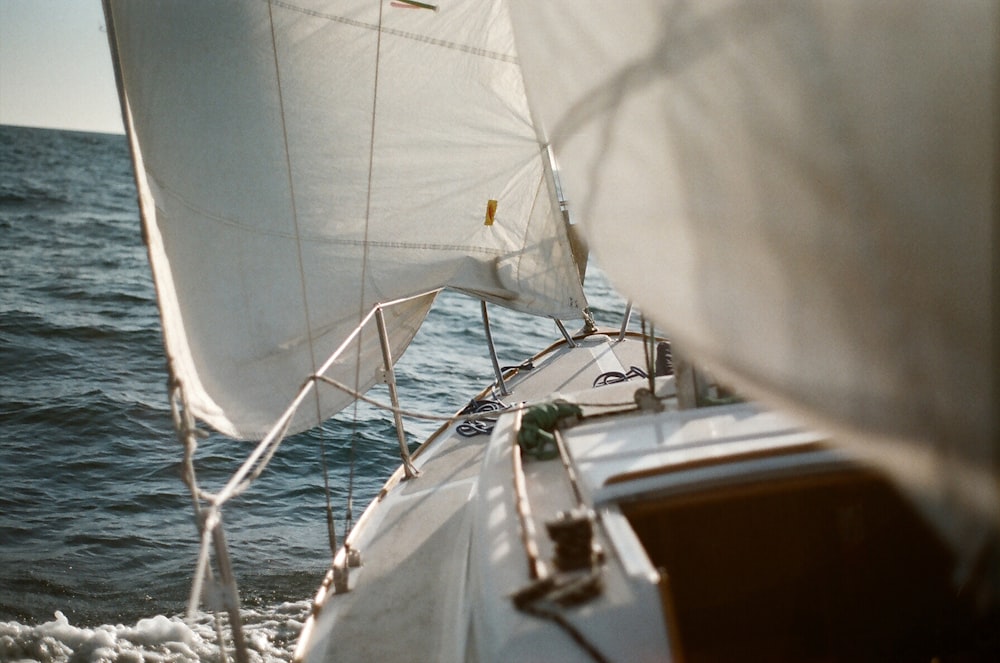
A long, long time ago and only yesterday, the materials for making my little life’s boat, were gathered in secret by the DNA of my Scottish, Irish, American Indian ancestors. But the real craft, the trued and tried boat itself, was crafted by the Great Crafter in the secrets that stretch back to the Beginning and stretch forward to the End of Time which never is. Like all carrying agents, large and small, puny and mighty, all that sail on this Ocean we call Life, or The World, my boat is unique and also it is exactly like every other little boat as well. My little boat, so small compared to others, yet just as specially made, will sail, in spurts and starts, or travel full-steam ahead, and go and go until the boat is moored someday as it was meant to be in the Eternal or until it crashes on the rocky shores of Ego or Despair. This is the truth about all sailing crafts, though many never know it because we either tie our boats up on shore, or we create a false shore in the water. But all true Truths try to teach us that our boats were made for motion in the ocean.
*
I am a little sailboat, who has long had the need for The Wind in my sails. I am lucky that quite early, I was taught what sails are for and what they are not for. I was as unlucky as many when my sails were brutally torn or holes were punched in the hull, the very soul of my ship. But I was not as unlucky as many, and I have managed. So, I have rebuilt my little boat many times with the help of others and that thing that true sailors call luck and that saints call grace. I have kept my faith in The Wind, which no one can control, and yet it exists. I have often sailed in the right direction with the North Star and Morning Star as guides. I have often sailed in the wrong direction and lost my way. Mostly though, I regret to confess, I have mistaken a mirage of my safety while moored to the dock for what I was meant to live as life on a boat.
*
There are many great ships that have sailed The Ocean, and sail it still, mighty and amazing in their superiority to most of our little folks’ small crafts. There are great ships with names like Caesar, or Pharaoh, or Titan of Industry, and many of these boats become enormous, powerfully engine-ed ships, making their way through The Ocean without need of The Wind, barely feeling the waves, never fearing the storms, and barely knowing they are moving at all, more like stagnant cities in the water than moving vessels. They put aside their sails and have no more need of The Wind. They take what they need from the Lands they conquer and leave behind. They take oil and slaves and buy more life vests than they could ever use; they sail their gigantic boats, boats that could house whole nations but only have enough room for one’s self. These have stopped being boats at all, and we look at those ships and we all want to have one of those ships, too. We want to be safe and saved and unafraid with everything we will ever need forever and ever, amen. And we look at our little tiny battered, torn-sailed little boats and we hate them and we hate us and we want to be them, the big safe ships. We look at the great steady cruisers and we long to have no need of The Wind; and we yearn to be in the Ocean but to control the way the Ocean takes us, like the great shipbuilders seem to do. And we forget that we are all created to be working sailors, not passengers. And we ignore what our heart tries to tell us, that even those with the biggest ships, will one day too find that The Ocean is bigger than they are. Perhaps when The Wind has wrecked the big ships upon the shoals of shallowness, or the sandbars of Eternal Truths, they too will long to once more sail a little boat.
*
Perhaps we will all, large and small, no matter how safe or how broken we think our boats are, someday find that The Ocean sends us an unlooked for buoy or a suddenly appearing piece of the Mast’s Wood; and we will each have one more chance to leave shore, and grab on to what The Ocean provides, and we will once more, like children, relearn a love of sending our little crafts out into The Ocean.
*
My boat’s sails have been tattered and torn so many times. I was not born a good sailor, and perhaps that has saved me. I have had to rely on The Wind’s benevolent appearing and disappearing, on the Ocean’s grace in storms and dead calm. I have had to depend on the help of fellow travelers who sailed alongside me, sometimes just keeping me company in the loneliness of Ocean life, sometimes teaching me something vital about how to sail, sometimes showing me what not to do by their own foolish choices at sea, sometimes sharing a compass that helped me navigate. And sometimes there have been those fellow sailors who, with great love, have helped me pick up the pieces of my little boat that I had allowed to break apart when I hit some shoals, or had left to rot in dock. And every once in a while, there was no one to help me, but only Someone to whisper across the waves:
“Fear not. Be still. Have faith. And know what you think you do not know. Don’t look at the waves. Keep your eyes on Me.”
*
I would like to say that I have been sailing The Ocean for six decades now, but I have mostly left my little boat docked uselessly in port. I kept thinking I was safer on shore, tied up to the Pier, with those I thought were peers and I felt already the salvation of knowledge of the things I had read about on “How to Sail” without ever needing to do the things it takes to set sail. I could tell you how to sail, but I rarely have experienced the thrill and dangers of sailing. So, I have spent a lifetime mostly feeling I should be happy that I had a little boat but never really knowing the purpose of my boat or why life seemed mostly rudderless and my sails sagged depressedly, longing for A Wind I would never risk meeting head-on. I have mostly lived by peering out, rather than journeying out. I have stayed on shore with all the best charts and maps but rarely finding the courage to launch my craft again and again, failure after failure, frightening success after frightening success, prophetically, mysteriously, in weakness and in strength, in death first and then life, baptized again and again by misadventure and death at Sea, and by setting my course, going into the Deeps, into the Pontus, into the waves left by The Wake of He who first Crafted and Who crafted the Sailor in me.
*
Last night there was a Red Sky and so I awoke today hoping for a sailor’s delight. But this morning the sky is still red- Warning! Warning! This morning the Ocean is covered over by Heavens which are a shade of red, red the color of shed blood; blood like the blood from two huge hands mangled by the nails of working His Boat and sailing The Ocean like no One has ever sailed it before or since, though we who know are supposed to have tried. And I am afraid. And I am uncertain I even know which direction to go. And The Great Sailor and all those before me who have managed to sail in His Wake are calling me to set out, while the sirens of safety in the numbers docked on shore make more and more knots in the ropes that tie me down.
*
What will my story’s end be? People call that a legacy, but most of us just leave with an unfinished story. I will not be leaving a beautiful houseboat, or massive warship, or richly outfitted yacht behind for those who carry on in The Ocean, those few who sailed close enough to my little craft to say, “I knew her” “My boat sailed for a time with hers” “I saw her boat on the shore”. I will have no lasting control over what becomes of those who carry on my boat’s DNA or those who may have learned something about their own boats by the teachings I have done or failed to do on “How to Sail”. But one thing I am learning. If I leave my little boat safely moored to this shore; if I am tethered to the sandbars of cares and needs and self and greeds; if I keep setting sail only to turn back again to dock my fears and doubts and insecurities and failings, instead of facing them head on, sailing into The Wind; if I do not daily, moment by moment, cure and polish and then test the seaworthiness of my little boat, I will never actually be in the boat. I will spend my Time, looking at my boat from outside of it. I will spend my Life, looking at my Life, from outside of it. If do not let the Winds fill its sails, my boat will never be what it was crafted to be. If I don’t let The Wind fill me, I will never be what I was Crafted to Truly Be.
*
A boat that is moored to the cares of the shore, can’t leave a wake. A boat leaves a wake when it is moving through The Ocean. We are each uniquely created by The Great Ship-Crafter to live life in the Ocean. We are given the ability to calm the waves and quell the storms, if we only have enough faith to start sailing, and once we start, to not look back at the sirens, and not look ahead at things that are mere mirages, but to point our little boats Due North, and let The Wind sail us towards what we were meant to call “Home”. Because if you are sailing The Ocean, one day you will wake up and realize that all along, you have been carrying your true home with you. Your little life’s boat has always been your Home.
*
Despite what any of us try to tell ourselves, none of us has ever seen the Far Shore from this shore. It is only when we are in The Ocean, that we understand that we were neither created to stay safely on this shore, nor were we created to try to reach the other Shore. We were created to row as hard as we need, to crew alongside those who sail within our latitudes and longitudes, to drift when we can’t feel The Wind and wait for Her to fill us again, to float and enjoy the beauty that is above us, below us, and all around us as we travel; to navigate with both honest fear and wise courage, and above all to be at Home when we Move and keep Moving within in and upon The Great Ocean.
*
What will I leave in the wake of my life? I pray that the flotsam and jetsam of my poorer decisions and weaknesses in sailing, will be carried away by The Great Ocean’s grace. I pray that my wake will leave a clearer sense of direction for those who sail behind me. I pray that there will be a small wake from my life’s little boat; a wake that leads others Due North, a wake that I leave when my boat is no longer seen by any but those on the Far Shore. I pray that above all, my wake will send waves to both near and far shores that swoosh with something that sounds faintly like something The Ocean would breathe, something like a person who had dipped her hands into the water and made small little circles of waves, something that sounds like what water would sound like if it were breathing in and out, ebbing and flowing. I hope that I will set sail enough times that my life-boat will leave a small little wake that sends waves gently lapping towards the world’s shores, and the children’s little life boats; a sound of waves in my wake that whispers something like this:
Shhhheeeeeee loooooved. Sheeeeeee whoosshhhh, llllllloved whiiiisssssh. She loved. She loved. She loves. She loves. Love….. Love……Love……..
My Mom, Jane Gordon Cook, March 31, 1934 – July 7, 2021
*
On July 7, 2021, my greatest cheerleader, most enduring audience, loving critic, incomparable supporter, and most beloved mother, Jane Cook, passed away from this life. Life will never be the same. Writing will never be the same. The following are some pathetic attempts at thoughts on her passing, in the knowledge that words can never express what we feel with great loss and great love. As I wrote the following, I thought of others I loved who have passed and those I love now and foolishly hope will never die. Friends –Seize the Day and let those you love, know it – right now. Jane
*
#1 Your Love Is Still Here
*
A lot of people died today,
but only one was mine.
A lot of people passed away.
I wonder, which were Thine?
*
I know not what is at Life’s End.
A lot of people can pretend,
that Death is simply Heaven’s Bend;
but no one truly comprehends.
All that I know?– You were my friend.
*
And I shall strive to live the part,
Your love created in my heart.
And I will trust, through all my tears,
that your Love still is here.
*
#2 I Only Know Now
*
And do not say to me, “It will…”
I only know what is no longer now.
And do not tell me “It will get better…”
Today I can only live in this moment,
that this bleak Finality “is”.
*
My eschatology veered sharply from yours,
the moment that my Some\body died.
The End Times are upon me
and I will live with ashes on my soul
in a world that cannot bear the sight of
the ashes I long to wear on my head.
If only the world could see the black armband
constricting the muscles around my heart.
*
Some\body died today; Some\body who cared for
and was cared for by me;
that first and ultimate person,
who made the “I”, in “me”, a “We”;
that “We” is now forever and ever lost.
And like a limb lopped off of my being,
the ghost of remembrance of what used to be,
gives me no joy.
Encouragements of what I might be able to do someday
without my lost limb,
give me no comfort.
Loss is all. Loss is now.
*
You long to leap straight and with daring ease,
back to the past of memories,
or to the future, which you believe,
is free of sorrow and heavenly.
Be free in knowing,
I do not begrudge you, your need or your worldview.
But please do not offer it to me.
It is a poor substitution for my grief.
*
Death for me, has brought endless ending,
and Now, is only dross.
And in my loss,
the emptiness and lack of meaning,
is all I can hold on to.
I cannot see the shore, until I have drowned,
and all I can cling to
is what made me feel safe,
and gave Love its meaning
for me, for us.
*
I have lost the one voice that’s been inside,
my head, my heart, for all these years.
Please keep your platitudes and thoughts you mean to cheer me.
I will, however, grateful be, if you would silently,
endure with me my tears.
*
Time has finally condensed the story,
constricting like a deadly boa,
to Only Now.
The Now is the ache of the battering ram of emotions,
the unbidden memories that spell “no more”,
the gaping holes in my heart,
the “what ifs” and “shoulds” and “could haves, should haves, would haves”
… if only.
*
Oh yes, with time, wounds stop seeping,
and may, in time, become scars.
Yes, duties and needs will stop my weeping,
but for now, my strength is bleeding out.
And in these lost and mournful hours,
I can only know Now, in my heart.
For the You that was mine, and the life that was “ours”,
for me, in life-left, left me ever alone,
from the moment for me, we were finally apart.
*
Going forward tomorrow I do not know how,
and your memories are slicing me through.
For today, it is true I may only know Now,
Yet one thing I do know — you loved me,
and Oh! How I loved you.
*
I will always miss you Mom, and I wish I could tell you that again. I will always love you, Mom and I wish that I had told you that more.
The idea of a creed tends to bring up religious connotations and perhaps because of that, the idea of having a creed tends to imply a status quo, a static belief system, and a do-or-die pact between like-minded people who join together over ideas that determine an “in-status” and “out-status” for anyone who does not adhere to the CREED (in capital letters).
*
A creed is defined as “a set of beliefs or aims that guide someone’s actions”. Sadly, to look at many of the religious or national creeds today you would have to assume that the last part of the definition has been irrevocably deleted, so that a creed is merely a “set of beliefs or aims”. No action required. On the other hand, many groups, communities, and religious or political entities, have creeds that imply definite action without the members of said group having any idea what those actions really and truly say about what they must believe to act in said ways. For instance, patriots who storm the capital are, to those who do not claim to be following the same creed, foolishly and blindly or willfully and grievously, acting on a belief system that is in fact quite the opposite of patriotic beliefs in a true democracy. Or take the example of someone who joins what is recognizably a religious cult. While all religions have cult-like attributes, the victim of a person or personages who create creeds around themselves in order to control and manipulate the actions of others for personal or group gain reveals the “clear and present danger” of man-made creeds. Because while we may belong to a church, mosque, or rotary or mason’s club, full of a membership that sincerely believes that our creeds are inspired, divine, good for the common good of the group, beneficent, helpful, unifying, heave-bound, or even “God-breathed”– the plain truth is, every creed is simply a human-made attempt to put into words their “beliefs and aims”. The supposed God-inspired or patriotically-sound attributes are by default, then, at risk of misuse, misinterpretation, and mistakes as all humanly-created ideas can be. It is good when looking at religious or national creeds to keep in mind that if there is a God, no one has ever completely understood or known the “mind” of said God. And secondly, no one, and this means No One, can take an historical creed, nationalistic or religious, or otherwise, and apply it perfectly, or even realistically and practically, throughout time and place.
*
So, what is my point, you ask? What is my “aim” in this focus on the idea of creeds? I have grown up in a world of specific groups of people, each of which group believes that we memorize and recite our creed or pledge in order to prove what we believe forever, and forever, in God we trust, America the Beautiful, and blah,blah,blah grace, liberty, and justice for all, amen. Hands on heart, or folded before us in prayer, we worship the idea of the words, without having to follow through with the actions required by saying we believe those words are guides to our “purposes, actions, and aims”.
*
Let me give you a simple reflection on two popular creeds in groups of people that I have belonged to. They come from creeds I have memorized and recited in front of groups of other people, solemnly and faithfully pronouncing the words and by doing so, implying with the rest of the people with me that I plan on living a life that adheres to the principles in that creed. The first example, for me, would be the “Pledge of Allegiance”, which I have memorized and which I used to recite (often under the duress of group-think begun in elementary school). (Disclaimer here: I no longer choose to recite the pledge of allegiance, finding its meaning opaque and faulty. You can read elsewhere in this blog, why long ago, for religious and spiritual reasons, I began to choose to stand respectfully during the Pledge of Allegiance, but not mouth these words of allegiance to what for me, had become an icon or an idol.)
*
America has some really excellent creeds, like our Constitution and our Bill of Rights, but our pledge to a flag, which is tragically for most people, the only American creed they have any real knowledge of, is not-creed worthy. And if you look closely, it more resembles a “bait and switch” than an important set of beliefs. To simplify this thought for now, if I am pledging my loyalty to a symbol, then I should understand what that symbol stands for, because of course a symbol is a GIANT container for BIG IDEAS. Tragically, I know more than many, as someone who has tried to teach symbols, metaphors, and other mind-expanding literary devices for years, the average person, whether a high-school drop-out or a Harvard grad, have little clue about the immense importance of and very real truths inherent in symbols, word-symbols and image symbols alike. Let me put it another way, when the American Revolutionaries were fighting for what they believed to be their freedom, the symbol of a flag and a pledge to support this flag were profoundly meaningful to give credence to their actions. For soldiers in any country who are fighting for their country’s ideals, a pledge said around the symbolic icon of said country can be an incredibly important and unifying way to more deeply and subconsciously understand the meaning of the actions of war. But that brings us to a different problem – when a flag represents merely a nation’s rights at any cost to other nations or people-groups, then we have put the horse before the cart, and we are acting first, and re-forming the intentions of the creed to justify the actions. This is the opposite of what a creed is meant to do. A creed is meant to provide borders around as well as guidance for actions
*
Of course, even sillier than thinking that a creed only needs to be about a piece of cloth we fly for national identification purposes, are those who have come to believe that singing a song before a sports event is creed material. And to make matters worse, most people don’t know the words to this “creed song”. And if they do in fact know the words, as I do, can they hit the high notes that are meant to soar our belief system into a heavenly realm? As a matter of fact, what has become known as the American national anthem, is merely an historical story-song, a hind-sight perspective, of how and when and who won our independence; an event that happened way, way back when. (Although in terms of keeping an historical perspective, compared to other nations and countries, America’s young hold on life should have given us a little more humility, but alas that has never seemed to be first and foremost among our brash, young nation’s traits.) The creed-song of our country in fact, holds no creed-worthy tenets and again, if one were led to believe that one should act on the belief system of said anthem, then once more we are reduced to believing that all Americans should care about is a piece of red, white and blue cloth and a song that we sing to worship sporting events.
*
From a true perspective of belief systems, if a person really knew what they were pledging allegiance to when pledging to the flag of America or singing the song of American freedoms, they would applaud those who take a knee rather than mouth some words, and join them on their knees in a fight for the “justice for all”. After all, that is what Americans say that we have pledged to uphold. And furthermore, rather than punish protestors, if we believed our national creeds, we would prosecute anyone – ANYONE—who incited people to storm the building that is the epicenter of those flag-creed beliefs; and we would remove from office those people who pledged allegiance to grant “liberty for all”. Because creeds can only take so much self-centered, ego-driven, or greed-tainted abuse and still have any rational meaning at all. Funny, how two people can claim to believe in and uphold the very same creed, and have such different aims and actions as a result of said belief. To see this even more clearly, one must look at religious creeds, which have become so written in stone over the centuries as to become the worshipped, rather than the worshipful. One only has to look at the recent abuse of creeds in both Catholic and evangelical institutions to see that our creeds can all too easily take the place of our God. After all a dead creed is so much easier to live by and with than a living God.
*
Just like everything ever written or orally transmitted to people and people groups, all communication has two important elements: Audience and Purpose. In creed-creating, one can see that one problem that is to be addressed is that an audience never remains the same. It doesn’t take a rocket-scientist or linguist, a founding father or theologian to understand, that if one accepts the changing hue, temperament, needs, and make-up of the audience, then a creed needs to be either flexible, or changeable. It needs to evolve, just like people and nations and religions need to evolve. If a creed is written for one audience, like a fledgling nation made up of other nation-groups, or a young religion made of up Jews and Gentiles, or for metaphoric purposes, let’s just say, if the audience was once a bunch of five-year olds, but now are a vast throng of twenty-somethings, or sixty-somethings, well, the creed you are asking everyone to base their beliefs and actions on, either needs to morph and transform and evolve, or you need to throw it out and start over.
*
The second example of creed-following for me comes from not my national identity but my religious upbringing. Now, take care here, because in my own beloved country of America, far, far too many people seem to have confused the nationalistic with the religious, making both the creedal tenants of a separate church and state ideologies, both tragically abused and ridiculously meaningless. But, as another example of creed-use and abuse, one particular religious creed that I have recited in unison quite a few times in a long, long life of church going, is called The Nicene Creed. This is a religious set of beliefs that was written (and rewritten) in around the mid 300’s A.D. by the religious leaders of the Christian Church; and it has ever since been accepted by all forms of Christianity, Catholic, Protestant, and Orthodox. This creed helps not only with understanding the interplay of intended Audience with belief systems, but the dangerous power behind Purpose in writing out a set belief system intended to inform actions.
*
The Nicene Creed is an excellent example of why, in order to understand the meaning of any creed or written set of beliefs, one must understand its purpose. In other words, to understand the WHAT, one must understand the WHO, but most important of all, one must understand and keep grappling with the WHY.
*
The Nicene Creed was written with the express purpose of “weeding out” and “gathering in”. It was written 300 years after the death of the supposed leader of Christianity, Jesus Christ, in order that the now powerful arms of the ruling class of bishops and “theologians” and paid professionals of the Church, could have a yardstick by which to measure if a congregant had a correct belief system or not. While the American documents of nation formation were written as a reaction to what had come before, they were also written with a great hope in what would and would not come after. The Nicene Creed, conversely, was written, not with a “hope and a dream” for a better world, like the American Declaration of Independence was, but the Nicene Creed was written expressly as a reaction AGAINST those who were questioning what had already become the status quo of a new religion. The Nicene Creed was written, as sadly, especially religious creeds often are, to protect the people who were in powerful positions and who “liked things the way they were”, in order that nothing would change what those in power had already determined the set-in-stone tenets of this new religion would follow. The Nicene Creed was written with the aim of ammunition against the threats that had arisen to the religion that had morphed out of the life, teachings, and hope of Jesus Christ, who never wrote a single document for us to use in the future, let alone a creed. One only has to look to the current year of 2021 to see how often we use creeds of national and religious institutions not to bring about meaningful and hopeful, productive change for all, but rather to prevent change and keep the status quo for those who benefit from the past, not those who need a foundation in the present, or a dream for the future.
*
It came as a shock for me to revisit the so-called standard bearer of creeds of the Christian religion and realize, that just like the American national anthem, The Nicene Creed, is not at all a creed – it is a written account of a group of beliefs about the history of the planet, the history of a man called Jesus, and the history of God. And like a crack over the head, I realized that all these centuries of reciting this creed and taking it as “gospel” has in fact, only led to one discernible aim and one obvious purpose – to believe this creed is to be “in”, “chosen”, part of “the correct group”; and to veer in any part of this creed, is to be “out” , a heretic, not one of the chosen group. And it doesn’t matter one bit, how those who recite this creed as a founding and important and even “Godly” document—it doesn’t matter at all how we act or live. We have reduced belief to intellectual assent and nothing more. We have reduced creeds to the level of secret handshakes or long-lasting party games (“party” has two meanings here). We have taken the meaning of what we call “faith” and reduced it not to a relationship with a living God or a relationship with the people we live with, but to a stagnant set of tenents, that barely effect our knowledge base, let alone affect our hearts, souls, or actions.
*
A creed can imply, for some brave and intrepid souls, an aim or an action. So, let’s say I still want to cling to my religious creed as something that should influence my actions. Let’s take some of the words of The Nicene Creed for example. If I actually believe for instance that “God is the maker of heaven and earth”, as my creed proclaims; then consequently, I should treat the earth as if it is God’s. If the whole earth, planet, people, trees, plants, animals, air, water – if all were made by a Supernatural Being that exists somewhere beyond the Earth but also within our World, and Who loves the whole planet as something She/He/They created, then how should I and my fellow creed-followers ACT? How should we, based on our creed, treat the Whole World, the created essence of Our God? Well, if actions speak louder than words, one would have to conclude as the inspired words found in James 2:14-26 does, that “faith without works is dead”.
*
To take a simplistic approach to deducing what I might mean when I say I believe in the ideas that have been written down in the Nicene Creed, let’s pretend I really did believe that when my group of fellow Nicene Creed believers recited this, we were joining together to commit to actions implied by the “beliefs or aims” presented in the words, and that by committing to the beliefs that would lead to actions we were also saying that we would hold ourselves and each other RESPONSIBLE for following through on how best to act on those beliefs and to LIVE OUT those beliefs in our community and in the world at large. If that were the case, what would it mean for me to say with others: “I look for the life of the world to come” and how would I act in order to live into a world that I prefer to the one we are making now?
*
A creed, to be any use or any good at all must be open to change, and in constant evolution, just like any group, or church, or nation, or club, or human being, should be. The ironic thing is that for a creed to be consistent, it must be open to new interpretations and new ways of living into the truths supposedly inherent in the written words. To be not only deeply true, but critically useful, a belief system must be a kind of oxymoronic foundation, that is both bedrock and solidly based in eternal truths, and also completely and eternally changing with the deeper understanding amidst the new realities and new responsibilities of the place and time in which humans live. A creed should be as evolutionary as every living thing in the created world actually is. What a person believes should be as grounded in what a person should be as nature is grounded to the Earth. To Be-lieve is to let my Be-ing, Live.
*
I have begun to look more intensely and intentionally, at the many sources of my own belief system and I have been humbled by the great writers, teachers, radicals, and most of all the “Do-ers” who have created the creeds that aim to guide us, both as citizens of the world and for some us, perhaps and hopefully, as “citizens of heaven”. And as I look and read, and reread, meditate, and grapple and struggle with these creeds, and find new creeds from other places, times, nations, and religions to wrestle with, I am trying to turn my telescope around the other way. I am trying to observe my actions, both current and past, and ask myself this:
*
What is my Purpose? What do my actions tell me and others about what I really believe?
*
What do I actually do to support the nation and community I live in, to the best of my ability in my understanding of what it means to be a good citizen with care and caring, and “freedom and justice” for all?
*
What do I honestly believe about my spiritual identity and the spiritual identity of my “audience”? What parts of my faith are “dead” and inactive? And how strong and true is the faith of my works? How much of what I say I believe is Alive, in connection with A Living God? Is the “Why” of who I am, leading me “further up and further in”, to bring Life and Be Life?
*
So I am, in effect, as all of us are, whether we know it or not, daily writing our own creed. We are either consciously or subconsciously, allowing new creeds to help us change for something that can simply be described as “better”; or we are allowing our fears and stubborn foolishness to keep us moored to the shoals of dead creeds, useful only for self-importance or a false sense of security and power. I began a little exercise, which I may write about later, but now is just a rambling musing and jotting down of ideas that I think I could look at as “My Current (but maybe not Forever, depending on revelations to come) Life Creed”.
I encourage you to try writing out what you think you believe to be foundational to your worldview, your creed. Then write out as many of your life’s actions that you can match-up to prove you have lived according to these beliefs. It is not for the faint of heart, but it is for those who desire a little humility with their hope today. I am finding as I meditate on this exercise more of the who of myself, more of the who and who not of my audience, and more of the Who of The One Who Is. I am also finding more of what the true connection is between my imagined purpose and my true purpose. I am finding that I really have never had much of an idea of what it all means in light of eternity, but that it is enough for me not to know some great purpose, as creeds would lead us to believe. It is enough for my purpose to Be me and to act in a way that I would like all humans to act towards each other. My faith can still be “the essence of things unseen but hoped for”; and my life creed can be the “peace that passes understanding”, the wholeness that means simply that I want to be active in whatever Goodness and Love are doing in the world, no matter whose creed is behind it.
*
I don’t know much, but I do seek for much more, and in that is, with a lot of grace, I believe, my salvation; for as that brilliant creed-buster, St. Paul wrote:
For now we see in a mirror dimly, but then face to face; now I know in part, but then I will know fully, just as I also have been fully known. But now faith, hope, and love remain, these three; but the greatest of these is love. (I Corinthians 13).
And any creed without Love at the center is no creed worth following. And Love is always the Ultimate Creed.
Please do listen to Kermit do it much better, but this June, I wanted to add my old, longing voice to voices for hope and for all the “lovers and the dreamers” of the world, and in support of the many hues that connect some of us who will not stop believing in the power of our Rainbow Connection.
(c) Jane Tawel June 2021
“Rainbow Connection” composed by Paul Williams and Kenneth Ascher, 1979