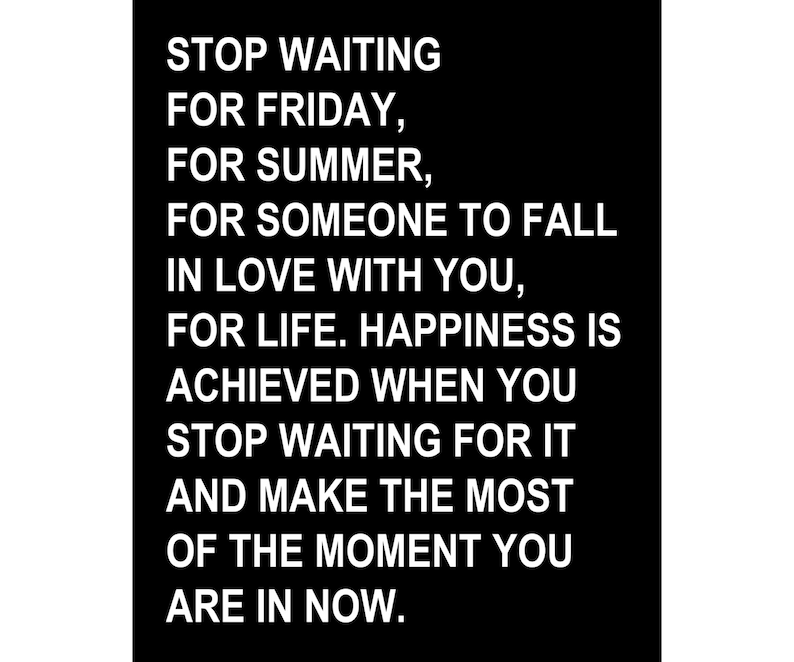
Note to self: Stop carping and Carpe Diem. Yesterday is over, Red Rover; tomorrow is a lucky guess or grace-filled hope, but today? Well, today is the gift of a lifetime. Enjoy and joy! Shalom, friends, and seize the day with joy in the journey ~~ Jane
Many of you know my mom passed away this summer. No day will ever be quite the same for me, but especially this season of Christmas, will never be the same — Mom loved Christmas. In the first picture here is an ornament from one of my mother’s and our favorite places in the world (Winona Lake’s Warsaw Cut Glass). It has my mom’s earthly dates on it and this: “She loved Christmas and she loved us”. If you knew my mom, you would know that of course, the Season of Giving was her favorite time of year. I hope she is enjoying playing Broadway show tunes or Christmas songs on some big heavenly piano today as she often did on earth.
*
The second picture, from a Christmas my Mom spent here in CA with us — well thankfully, Mom is not seeing it, since she would not like how she looks, but it is a good reminder that with True Love, no one really cares how we look, do they? We enjoy very much this whole idea of little poor minority, Jewish baby Jesus in a stable, and then we forget that there were no kings and gifts then, (that we added on later), and there was only fear, and lack, and uncertainty, and ugliness, and nationalism, and loss, and grieving, and pain (childbirth not least among the pain). There was nothing — not even a home. But there was the most important thing. There was true and great Love. And there was Hope. And there was the kind of joy that is deeper than happiness, the kind of joy we like to think that angels sing about.
*
Oh, yes, this is a lovely season of remembering; not one story about one baby, but all of our stories about love in adversity and love in the good times, and joy in the very present moment. As both Jesus’ ancestors and future religious descendants would advise: “Remember”. “Never forget” “Store these things in your heart.” Remember so you can be present in this moment to the absolute joy that you are alive and have been loved and are loved.
*
So, as we wrap up a year, and it has been quite a year! — and as we wrap up our gifts for each other, and wrap our arms around each other, and wrap our minds around another year of uncertainty, and loss, and pain, and for so many, too much of nothing or sorrow or need — we need to be reminded — Remember! — that all that ever matters, all that ever remains, is the Love. Remember the love. Seek the love. Embrace the love. Be the love.
*
Be the hope for someone today. Be the joy for someone today. And above all–Be the love.
This is a wonderful season to remember that what we really care about are those we love, and to let the people we care about know it. “Taking Care” — that’s really what the whole Christmas story is about, isn’t it? It is a good season to remember that we humans long to worship something or Someone that takes care of us, even if we are naughty and not nice, even if our doubts overwhelm our faith, even if we have erred hugely in our relationships with others and ourselves, even if we, like the little drummer boy, have nothing to give in return . So the question is — if we long for that kind of care and love despite ourselves, and despite the other person, isn’t the message of Christmas about our deep need to give that care and love to others, even the ones we find it hard to love? Didn’t little baby Jesus eventually grow up to tell and live that story?
*
It’s a good time to remember that Baby Jesus was blessed enough to grow up to be a man, and a good time to read some of the stuff he said when he wasn’t a baby any more. It can rock your world. I’m trying more and more to let it rock mine, but I won’t kid you, it’s not easy, which is another thing we have to remember little baby Jesus the grown-up said. No, true love is not easy. But then, the great and true things in life are worth the price, aren’t they? Isn’t that what we are trying to symbolize with our crazy gift giving and decorating and feasting Holy-days — that Love is priceless? I know my mom believed that. I have read that is what Jesus thought, too.
*
My mom was a giddy crazy lady around Christmas time. Price tags were meaningless to her. And she had a horrible time waiting for anything. Unlike I, advent and anticipation did not bring her happiness. There was never too much — there was just so much to give! I once mentioned I liked nativity scenes and needed some ornaments for the tree — so Mom would send not one, but three nativity sets and keep sending ornaments and decorations, and yes, more nativity sets, every year. Putting them up this year made me cry those tears you get — you know the ones — where you cry because you are so sad and missing someone but you are sort of smiling and laughing and happy too because you feel so much love still warming up your insides from memories and thoughts of that person, who is also making you cry. Remember. And so it goes.
*
My kids and husband don’t know it yet, but I also got a little remembrance “thingy” to give them each this Christmas, that commemorates their grandparents, Raoul’s folks, Esther and Gaston Tawil. One year my dearly beloved father-in-law took me to Fedco or Feddies as he called it and we bought some special little fragile Christmas ornaments for the tree. Each year I put the ones that have survived on the tree and think of him. And our first Christmas with our first child, Justine, we flew to D.C. to spend with Gaston and Esty and Uncle Guy and I bought them ridiculous ugly Christmas sweatshirts with something along the lines of Proud Grandmother and Grandfather of Baby’s First Christmas. You can see below how delighted they were to wear those ugly sweaters, even though my mother-in-law had such style and beauty, she wore that ugly thing so proudly. Look at her face below looking at her new granddaughter. There was no one who could squeal with pleasure like Esty Mizrahi Tawil and Gaston would chuckle with delight as he spent time with each of his four dearly loved grandkids. Esty left us all far, far too soon and Gaston is with her and my mom now too. Ah, I miss them so very, very much. But what a lucky, lucky human I am to have such memories to store up in my heart. Never forget.
*
My mom’s and Raoul’s parents’ wonderful Christmas spirit lives on — especially in their grandkids, my children, who aren’t children any more, but who keep the traditions, keep the good things, do a great job of working on healing the bad things, are incredibly giving humans, and who each live lives that did make and would make their “Gram” and Papa Tawil and Grandma Esty proud.
*
So yeah, this year we sent a traditional Christmas “brag” letter, because when my mom was bragging about her own children and grandchildren she was happier than anything. I am proud of my husband and my kids, and I am working on being proud of myself. I am proud to be the play-it-forward carrier of my mom, my dad, my grandparents, and my parents-in-law. I miss them so much. I remember and I am here now and I will do my best to carry forward all the love. All the love.
*
So Merry Christmas and Happiest of New Years to you all. Hug your loved ones close, even if they squirm. Study something or listen to something that brings you both joy and growth. Find forgiveness for others and yourselves for everything. As a different but gloriously similar tradition to the one Jesus believed but which teaches truth as Christ’s many parables taught, let the negative seeds within you go unwatered and nurture the positive seeds that also lie within you so they may grow to the size of huge mustard plants — huge Christmas trees.
*
Remember the good and the love and let it grow within you, this season, and every day you are blessed to wake up. Whatever you celebrate, celebrate with abandoned joy in the very present precious moment. Take care of yourself. Take care of your loved ones. Take care of strangers. Take care of your enemies. Take care of the world and the planet.
A little Riff in my thinking today on something Henri Nouwen once said:
Hope is coming, always coming. When you have ears to hear and eyes to see, you will recognize Ultimate Life at any moment of your life. Life is Advent. Life is recognizing the eternal presence of Love.
And so, we find that any where we seek, we arrive at the same conclusions which are the conclusions of More and Less. We seek and we find that first of all, there is Something / Someone “more” than I, some ineffable, ultimately indescribable and yet deeply knowable Reality Beyond This ; a “More-ness” that leads us forward, that rocks us back on our heels from time to time, that frightens and comforts us, and that we keep seeking to find outside and inside ourselves, using everything that is amazingly given to each of us, all of us, as our inherited miracles of mind, will, heart, and soul, those untouchable parts of Self that we are gifted to use and to be useful as human beings, beings evolved from a Creator’s somewhat daft but glorious supernatural experiments in Cosmic Creation. There is so much More – to life, to me, to you, to reality, to All. More.
*
Secondly, we find there is so very much Less. There is appallingly less than we thought there was. Less enjoyment in that thing. Less of me that I like. Less of you that I like. Less certainty in what I believed last year, or last week, or a minute ago. Less to hang on to. Less that I understand or know or can just deal with thinking about today. There is so much Less – to life, to me, to you, to reality, to All. Less.
*
The paradoxical existence of ourselves is the paradoxical reality / unreality of the meaning of life.
*
And yet, we find that there are the same basic and good and absolutely necessary ingredients that are used by every Good Chef in the Kitchens of Belief Systems to make the Meals of Meaning. There was a great cookbook that came out with this profound belief system as its basis, entitled, “Salt, Fat, Acid, Heat” (https://www.saltfatacidheat.com/ author: Samin Nosrat). Anyone who has studied any religion or profound spiritual philosophy can take those same four meta-ingredients and relate them directly to the myths, laws, methods, and teachings of their own belief system. As examples, think of the fat of Hebrew sacrifices, the salt of Jesus’ teachings, the heat as one of Buddhism’s five spiritual elements, and so forth and so on. (I fear, today that most religions or belief systems have far too many acidic elements in their concoctions to be palatable, but that’s another thought for another day.) There are only three elemental universal spiritual elements, and like necessary ingredients in a good reduction sauce, these three things reduce all belief systems to the More / Less of The Real Real.
*
We find that every teaching on meaning can be reduced to what a man named Paul simply stated as the temporal and the eternal bottom line: Now these three things are the only truly real Reals and the only things that will remain in the moment, in the day, in one’s life, and in an Eternity that is “God-Knows-What (and Where, and How, and Who…)” – These are the only realities, no matter what you think, feel, or do – the only True Truths and only true parts of any one or any institution or nation or community, or any relationship, or any philosophy or religion or quest – “Now these three things exist enough to remain: Faith. Hope. Love.” (I Corinthians 13:13)
*
That’s it. That’s all She wrote. C’est tout. Finis. And when you put it like that and you know anything about anything any one believes at any place or time in all of our history of searching for meaning, you think two things. One is, Yep. And Two is, so what in the name of common sense are we doing with our lives chasing after all this other bogus stuff?
*
And there it is again: common sense. Common: meaning every one, everywhere, at every time has it. Sense: meaning pretty much everything we consider to be what we know of reality; Sense as in one’s mind, feelings, intuition, and the natural Nature of things around us on this planet that our five senses sense.
*
Here is the problem. No matter what we think we believe or Who we say we believe in or how much we have accomplished in the name of our own belief system whether that belief system is nationalistic, religious, or spiritually philosophical, if we accept that the only things that are real and lasting are at least one of those three things that in English we symbolize with the limited words of Faith, Hope, and Love, if we accept that one of them is real and more important than some other stuff we might live for (for example if pressured most of us say we believe that all we leave behind or do of value while we muck about here has something to do with “love”, right?); IF, Big IF –then we are admitting that everything else we do, does not have ultimate or deeply truthful or lasting meaning. Everything. Everything. Including protesting, preserving, progeny and parenting, producing, or even proselytizing. Yowza! And for human beings, to accept that in the Long Run of Eternity, none of that matters, well, that is almost untenable. Because, well, we are human-doings, doing, doing, doing. Even when we seek meaning outside doing, we are doing things to make ourselves into something that thinks better by doing thinking better, acting better by doing actions better, feeling better by doing emotional stuff better, and believing against all proof, that we are made more whole or at peace or saved and sanctified or on our way to nirvana or heaven or self-realization by doing, doing, doing it all better, better, better. Yada, yada, yada… blah, blah, blah….Are we exhausted yet?
*
Is there a solution to our problem? Well, we all believe there has to be right? Some of us believe the solution is up to us and that we can change the whole shebang if we all just pitch in and Rodney-King it by the revolution of justice and just desserts for all and by “just getting along”; or if we start taking the Planet’s dying gasps seriously this time and all become the EMT’s of life support Our Mother Earth needs pretty darn quickly to survive her children’s rabid inheritance-stealing. Some of believe we simply say magic prayers and believe in the reality and suffering of Someone else and then this world doesn’t matter because we will go to a new world somewhere else. Some of us believe that there is nothing other than what is in our hands today so we better grab more of it and some of believe that it is all impermanent and will continually morph into other new existences. Oh, there are a lot of beliefs that all dance around the same longings within us and yet, at the base of every single foundation of a human belief system are these three unassailable, undebatable, ultimately incomprehensible and un-own-able building blocks of Reality. At the basic basics of All are: Faith. Hope. Love.
*
Faith is what a mind is left with, when thinking is gone.
Hope is what a heart is left with, when feeling is gone.
Love is what a Self-Soul is left as Being, when all else and all others are gone.
*
How do I attain faith, hope, and love? I can not. They can’t be “done”. They are each and all the gifts of The More. They are each all the grace of The Less.
*
How do we keep seeking after things that we can not understand? We stop collecting answers and we begin to find peace in the questions and mysteries.
*
How do we harness and shape our often ornery and conflicting wills to do those things that lead to Something/ Someone More? We must find the paradox, the balance/ unbalanced nuances in living in spiritual disciple and control and also in letting go and releasing.
*
The Three Realities of Faith, Hope, and Love, are things that I cannot understand, and yet that I know. And that is frightening in the short term and also the only comfort in the long run. I should seek them more than gold, more than praise, more than accomplishment, more than friendship or family, because they are the only things that will create something within my personhood that is worth eternal existence, and the only things that will make my day, my experience, myself have any meaning, any joy, any purpose, any significance. And yet I will never find them as I would any of those other things I might seek.
*
Each and every moment, I have to Be, so that faith, hope and love can find me.
*
And from a long distance, The Parent saw the wayward child. The Child was slogging through the mud and mire of need, lust, and the longing for meaning. The Parent had waited and waited for the Child to come Home. The Child had traveled far away from Home, and far away from The Parent. She had searched the world through many places and none had been Home. Now the Child was lost in the fog, and the Storms rose up, and all she could hang on to in her terror and despair, was the faint hope that she was finally walking in the direction of Home. The Child fell down again and again and finally she could not go any further.
*
And The Parent saw all, and began running toward the child—running, and running, and running with the supernatural power and the freedom and grace that Only True Love has. And the Child, caked from head to toe in the dust of her human attempts to find the Love she had left at Home, looked up from the dirt, and out of the corner of tear-filled eyes, the Child saw The Parent – not clearly but very dimly through the storm and her tears. And the Child heard faintly above her moans and sobs, The Parent call, “My beloved, I love you.” And the Child couldn’t make out the words, but she heard her Parent’s Voice and she understood the meaning. And The Parent found the Child and lifted her up and embraced her and held her tight, and the Child couldn’t feel the shape or the strength of The Parent’s arms, but suddenly the Child was held upright and though she could no longer walk, she could be carried. And the Child knew that The Parent had always been carrying her. And They were headed towards Home.