Los Angeles Dodgers Win World Series — Los Angeles Times, October 28,2020
This is a Team
by Jane Tawel
This is a team and the players’ win is worthy of celebration. (Yay, Dodgers!) Political parties are not teams and politicians are not star players and we have to stop cheering for them as if all that matters is whether our team wins. We shouldn’t want a party to “win”, no matter what, no matter what rules they break, or how they play the game, just because they have been “our team” for a long time. What we should want is for our nation’s values to win, and for the world to be a better place for everyone, not just those who “wear” the same color. We should want our political leaders to serve those of us sitting in the stands (and if they serve-up L.A. Dodger dogs this year, even better). Citizens are not the fans in this political game, folks, we are the umpires. Don’t hope your political party “team” wins, hope the nation’s citizens win. Vote like a referee. Live like the commissioner of all the teams, because that is what American democracy is all about.
I am (sadly) curious about what the “Christian” lemmings’ take / excuse is on the latest news that Donald Trump, in order to treat his Covid 19 symptoms, took a drug that is made from aborted fetus cells. Anyone? Anyone ready to look at the definition of hypocrisy, now?
I speak here from what I hope is an evolving, growing Judeo-Christian Worldview and a belief system that reaches out to all forms and belief systems of truth, light, joy, love, and peace. However, every now and then, I simply cannot remain silent when I see so many, at least in my country, America, claiming a type of “Christianity” that I don’t recognize as either Biblical or God-loving. We used to do these things called “testimonies”, in the churches I grew up in. Here is a little one of mine for today.
If I claim a Judeo-Christian worldview, it is not about whom I support, but WHY I support them, for we believe God looks at the heart. And for the one who claims either Judaism or Christianity, there should be only one “WHO” that matters — our Parent/ Creator/ God. My choices about anything and everything are important because of what that says about my walk, my religion, my soul, my God. As Jesus makes tragically clear: “What does it profit me if I gain the world, but lose my soul”? The only WHO that matters is Whom I say Christ is. The only WHO that matters is the God of LOVE of the whole world, the whole planet, the whole of Us, from the least to the (temporarily) greatest.
I will once more recommend a deep dive into the actual words of The Christ that many of us have claimed to follow. Matthew 23 is shockingly bold and convicting for starters. Warning: there is absolutely nothing at all on abortion in Christ’s words or in fact any of God’s, but there is quite a lot on hypocrisy and lies.
As just one little sheep myself, I am trying to follow the right Shepherd, not the wolves in sheep’s clothing. I am trying to take these words to heart from Luke 12:48: “From everyone who has been given much, much will be demanded; and from the one who has been entrusted with much, much more will be asked.” Jesus is very clear that there will not be any politicians or even church leaders to stand beside me on judgement day. He does promise me judgement however, on how I treat others and how I follow “the Truth, the Life, and the Way.”
Sorry to be so preachy, but it just matters so very, very much to me. Not this man, or that man matters one whit in The End; and I matter not all; but it all and all certainly matters about The Son of Man and what some of us do in His name. #nocheapgrace#nocheapSavior
May you today find your own way to Truth, Life, Love, and Joy. May you know the value of your very own soul above all things temporal. May you be bold and brave enough to stand up and be counted among those who would change the world, even just your own little corner of it. May you have the assurance that Good will always win in the end if we truly believe that “faith, hope and love will reign eternally”. And above all, may you know that there is a Spirit-God Who loves you — just little old you.
I needed reminding today that Hope is a gift. All I need to do is hold out my hands and accept it. But I must risk holding out my hand. I must for one moment forget, how many times that hand has been slapped away by disappointment, fear, anger, or pride. Only by forgetting the past moment, can I welcome this new moment of hope. I must remember that I cannot hold onto hope if my fists are closed or my hands are full of selfishness, greed, or vanity. I must remember how lovely it is to hold things lightly enough in one’s hands so that they can be filled with hope. Hope is a gift, but I must open myself up to accept it.
Hope is a gift, but I must listen for it, tune my heart to its sweetness. I must watch patiently for Hope to alight. I must keep my hands open for hope to remain. The minute I try to imprison hope, it will flee from me. Above all, I have to remember that there is plenty of hope to go around. Hope is strongest when it is shared.
Today, I was reminded of the long arc of hope by these artists and writers. I am thankful to them and history, both mine and the world’s, for reminding me that Hope is “the thing that perches in the soul, singing the tune without the words, never stopping at all”. Hope patiently waits for us to remember that it is powerful but meek, self-contained but kind, and that every love ever loved needs hope to help it survive.
Hope is that which inspires me to join the dreamers, believe in the goodness of other people, know that love is stronger than death. And as Dr. Martin Luther King, Jr. reminds us, while finite disappointment is real and hard, we must never lose hope, for Hope is infinite.
Keep Hope Alive. In fact, “live right under it”. ~~Jane
“Listen to the mustn’ts, child. Listen to the don’ts. Listen to the shouldn’ts, the impossibles, the won’ts. Listen to the never haves, then listen close to me… Anything can happen, child. Anything can be.” ― Shel Silverstein
“You may say I’m a dreamer, but I’m not the only one. I hope someday you’ll join us. And the world will live as one.” ― John Lennon
“It’s really a wonder that I haven’t dropped all my ideals, because they seem so absurd and impossible to carry out. Yet I keep them, because in spite of everything, I still believe that people are really good at heart.”
— Anne Frank
“The very least you can do in your life is figure out what you hope for. And the most you can do is live inside that hope. Not admire it from a distance but live right in it, under its roof.”
— Barbara Kingsolver
“I believe that imagination is stronger than knowledge. That myth is more potent than history. That dreams are more powerful than facts. That hope always triumphs over experience. That laughter is the only cure for grief. And I believe that love is stronger than death.”
— Robert Fulghum
“And now these three remain: faith, hope and love. But the greatest of these is love.”
— Anonymous
“You can cut all the flowers but you cannot keep Spring from coming.”
— Pablo Neruda
When the night is dark, may you still see how bright are the stars, Jane
Tomorrow will be the anniversary of the tragedy that befell America on September 11, 2001; forever more known as 9/11. Today, I look out on my little Southern California hamlet, after another night of worry about the fires on the hilltops so close I can see the flames from my upstairs window. Last night one “small” jet and a huge airplane — my neighbor knows the names of them but I don’t — swept back and forth, back and forth across the hills and across my town of 38,000 people, most of whom were out on the streets watching. It felt like the allies had arrived. The planes sprayed stuff to keep the fires from my home. These planes also carried the people who were among the first responders to the fires, and they joined the ranks of firefighters across the West Coast, bravely trying to save life, limb (both human and tree-based), and property.
We read a lot about how these fires are due to the disaster we have wreaked worldwide on our planet. Let’s call it what it is — call it climate catastrophe and human greediness run amok. Last week, one short hour from where I live, the temps topped the all-time record charts at 121 degrees, while I merely had to put up with 112 degrees. The skies in Northern California were orange yesterday and the ash on our cars and sidewalks down here was nothing compared to the blanket of ash covering San Francisco and other northern climes. How we wish someone would fix all this, but it’s down to us, isn’t? It’s down to me to get serious about fixing my patterns and habits and attitude and get on board to try to help make right what we have all helped to make wrong?
I cheered when the planes swooped up my hill — to save my life and my photo albums. Tomorrow most of us will give a small nod in remembrance of the horrible day that the Twin Towers caught fire, and so many lost their lives and we all lost a good chunk of our innocence. We will also briefly give tribute to the many people who lost their lives or health or ability to sleep at night, as first responders to that destruction they rushed into as heroes on 9/11. But today, as I keep praying against the imminent danger to me and mine, I realize how easily I forget the constant dangers, dangers exacerbated by our foolish ability to forget and move on.
I am thinking about the world’s brave men and women across this country — not just firefighters, but medical personnel and police and paramedics and EMTs; and I think, we all need to become more like those brave souls. I am thinking about first responders and the heroes who come when planes hit towers, or bombs fall, or pandemics flood hospitals with patients, or fires rage across the country, or bombs fall, or whatever the immediate calamity is, and I think, oh, thank God there are people who are willing to do that. And then I think, well, what about the dangers and looming calamities that don’t feel so imminent but are encroaching, encroaching like flames down a hill or may suddenly be fanned into flames by the embers we carelessly or foolishly ignore? If we want to solve the world’s problems, then we need to stop passing the buck and start doing whatever we can, one little “me” rising to the challenge of the day. And we need to do a better job of remembering those who have risked their lives as first responders, and stop taking them for granted. And most of all, we all need to start responding, and not keep thinking we can sit it out, while the professionals take care of it. We can’t all be fire fighters and we mustn’t try to do surgery on patients if we are not doctors, but we can all respond with everything we have got, to turn-around the fires of environmental destruction, human misery, and out-of-control rage, hate, and greed and to heal the land and each other. We need to all do much more — small or large acts of sacrifice and purposeful actions on behalf of making the world safer and saner for all. And it will help if we can retain focused remembrance of the times that brave heroes and even the lesser beings like ourselves have, in the past, risen to a challenge because we all responded to the need of the hour. That hour is now. Will we respond?
We need to dig deep and find the heroes inside of all of us, and become like the heroes of any current catastrophe that seemingly afflict us now on a regular, every-day basis. I need to see myself as someone who is willing to sign up daily to be a “first responder”; that is if I want to save this planet and save humanity from the catastrophes we so easily think are someone else’s problems to solve. They aren’t — they are mine to solve — one hopeful, kind, humble, brave, and personally necessary response at a time. Because if we are all trying to solve the problems and save the planet and help and protect and care for each other, why then, we can do anything. We know that, because we have done it again and again and again. So let’s respond — again.
I wrote a sort of pledge that I thought might help me commit to this idea. It’s a pledge easily broken and I am sure I will break it almost daily. But pledges are meant to be made, knowing that it is not failure to keep them we should fear, but we should fear never trying to keep them in the first place.
My Pledge to Respond
By Jane Tawel
*
I pledge to be a first responder,
To that which this day calls me to be aware of,
And to care for,
To take charge of,
And to help out with all that I can,
And to humbly address as my problem,
that which is before me
Because I choose it to be.
*
I pledge to serve my community
Which is everyone in the world;
And to react heroically to
The moment in Time in which I am called to live.
*
I pledge to bravely and sacrificially respond
to whatever imperils the planet;
to stand and be counted among those
willing to sacrifice to save the goodness of Creation,
and to delay more of my own gratification
in sight of the urgency and depth of other people’s needs.
*
I pledge to charge ahead
whether or not anyone is following behind me.
I promise to courageously accept my own responsibility
In taking on the job of being a good human being
and a good caretaker of all created things.
*
I promise I will keep training
to be a more fit and better person,
And to respond willingly, intelligently,
And charitably to the problems and people before me.
*
I pledge that I will look on everyone as my responsibility,
Stranger, friend, family, neighbor and even foe;
And I will treat their lives and their property as equally important
As if they were my own.
*
I will speak boldly to others about what the dangers are
out there and up ahead,
And I will tell the truth,
In order to encourage my fellow human beings,
to turn around, away, or against
That which endangers the very lives of us and our world.
*
I promise to think of my life’s work
As a vital part of the place in which I live — Earth,
And of the people with whom I live — Mankind;
*
I will not sit back and expect anyone else
to fix it or solve it or save it,
but I will be glad of anyone’s and everyone’s help.
I will stand shoulder to shoulder with hope
And go forth each day knowing that together,
We can turn ashes to beauty.
But no matter what anyone else does or does not do,
You can read my latest on an exercise, a meditation, some insights on “Stuff” for free if you follow this link to my post on Medium.com. Hope you will read and enjoy. Jane
Today, in my country, is a day that is known for recognizing something called “The Annual National Prayer Breakfast”. The irony, not least among all the current ironies of this day, is that if anyone who actually claims to follow either Jesus Christ, as a Christian, or who claims to be a believer in YHWH God, as a believing Jew or Christian – if that person actually understood the Bible, they would know how very wrong this whole idea of “National Prayer” is, at least as practiced here. And not only is it wrong, but we who believe in prayer, should tremble if we do in fact believe that God commands us not to take His name in vain. Because prayer is only a type of self-vanity and more frighteningly, the abuse of God’s name if we pray for people who do not want to live into the truth, who do not love, who do not follow the commandments of God and the Golden Rule of Christ.
I read an article in the Washington Post today by Chris Coons, entitled “Why I pray for Donald Trump”. Coons obviously has a good heart here, obviously, but he is sadly, just another person who has jumped on the bandwagon of a religion that has been skewing south, at least since the days of the Roman Empire and Constantine. This article by Coons, is among a host of others trending by self-proclaimed followers of the God of Abraham, Moses, David, and Jesus. It reveals the current, rampant misunderstanding of prayer and tragically, does not follow the teachings of the person they claim to follow, in terms of what Christians’ chosen worldview illuminates prayer and faith to be.
If someone wants to claim to follow Christ, then one should understand the enormity of Jesus’ words when he says, “And when you pray, do not be like the hypocrites, for they love to pray standing in the synagogues and on the street corners to be seen by others. Truly I tell you, they have received their reward in full. But when you pray, go into your room, close the door and pray to your Father, who is unseen. Then your Father, who sees what is done in secret, will reward you.” (Matt. 6)
Jesus goes on to teach his followers how to pray, and people have been memorizing this prayer for centuries now, and yet still do not seem able to follow through on the prayer’s requirements for how we should then live. It begins with our unwillingness to accept that prayer is rarely, only very occasionally, meant to change the will of God. We, as a matter of fact, are meant to change the will of other human beings, not God. Nor is prayer meant to get us out of the fixes and problems that are a result of our own actions, choices, and sins. The only thing we can pray for in those circumstances is grace. But we have with great gains in our own sense of power and entitlement, manufactured a false religion based on the cheap grace that Dietrich Bonhoeffer and Jesus both warn us against relying on. Prayer is meant to humble us into asking God for our greatest needs, the true needs that all human beings have always had since the beginning of time.
Our two great needs are: Firstly, the willingness to share and love others as we love ourselves; and secondly, the need for repentance, and change of heart. Christ’s own prayer, that he used as a template, is full of humble thankfulness that God has provided all of us with the means, physically, emotionally, and spiritually, to have enough to live, and to live fully and completely. The prayer is also full of humility, humble mea-culpa, and an aching need for God’s forgiveness every day for what we have done wrong. Remember, this prayer was being prayed by the sinless Son of God. And that is perhaps why Jesus strongly commands us to pray alone. Because true prayer is not only asking for what we need most but confessing to our most egregious sins against God and man. I don’t know about you, but I rarely have a desire to confess my sins in public prayer. I sincerely doubt anyone will be doing that at National Prayer Breakfasts today.
God’s intentional involvement with his created humans’ need for a king and a nation began with the Hebrews. In I Samuel 2:25, God gives his people this sobering word of Truth. “If someone sins against a man, God will mediate for him, but if someone sins against the LORD, who can intercede for him?” But they would not listen to the voice of their father, for it was the will of the LORD to put them to death” (I Sam. 2:25). Prayer is meant to ask God to help us with our problems with each other, because we are all failed, flawed creatures. Prayer is not meant to put some of us on a pedestal so high, that we have convinced ourselves they do not need to address their sins and change their ways. God hasn’t “chosen” any of us to not need forgiveness and grace from Him.
I spent a lot of years working for businesses that wanted to claim to be “Christian” and decades of going to churches that wanted to claim to have the truth, the whole truth, and nothing but the truth about Christianity. And there were people in many of these institutions, who absolutely and truly loved God and tried to truly follow Jesus with their whole heart, soul, mind, and strength. I loved praying with them. I loved them and I felt loved by them. I would not be who I am today without the prayers and love and truth-telling of some people in my life who were as much like Jesus and as all-out for God as anyone could possibly be. I rely daily and deeply, on the prayers of even the most flawed of us, especially my own very flawed prayers and flawed self.
But today, when I read Mr. Coons call to pray for the president, I was reminded of a time when I was asked to join in prayer for the health and well-being and decision making of the top leader at one of these Christian institutions I worked at. We were also asked to do this rather trending thing in Christian circles today, and to lay hands on this man so that God might heal him and give him “power from above”. After all, God “chose him” for this position. The problem was, I knew for a fact that this man was a liar and was lying to all those good, “just-gotta-pray-about-this” folks. While they were praying for him to be healed and strengthened to do “God’s work”, he was lying about his situation, taking the money, and secretly sending out applications for jobs elsewhere. And I knew a couple others in that room of hands eager to lay some blessing on this leader, knew this man was lying too.
And I didn’t make a big deal of it – it was my job, after all, and I was a peon, a nobody; but I wasn’t going to be a liar myself. I stood quietly in the corner, while they all gathered around, laying on hands, and verbalizing to God, and since I was a nobody, no one noticed. But I always think no matter where I am, or what I do that there is One who sees. So I was not going pray to a God who I had to believe, considers my every word and deed as something He cares about. I have to believe in the type of God who cares about my needs, and cares about my wrong-doings. Otherwise, He’s not God; He’s just a lazy, missing in action, government official.
If you want to know how people who truly believe in the Bible or in the God of Jesus, Messiah, are supposed to pray for despots, dictators, Herods, Pharoahs, and certain presidents and senators, and for nations who like Babylon, entice the people of God into giving up God’s Kingdom for the kingdoms of human rulers, then start reading the stories of Moses in Exodus and don’t stop until you finish with the prophetic words of Malachi.
Read what the people who want to be known as God’s Chosen People pray, when they aren’t willing to pick and choose how to follow God. Be sobered, as I have been, on how we are to pray to change how we live, and not pray with a desire that our 401K’s will keep growing. We have lived so long as overly entitled self-sanctified wannabes, in this latest Babylon called America, that our prayers for others, along with our easy path to salvation, are not questioned. Read what the Bible actually says about those who walk the easy path, with flippant prayers. Don’t get mislead by the later teachings added to what we erroneously call a “New” Testament, and which were written as side-notes and today, are greatly misunderstood and misattributed to a man named Paul. Read some of the Psalms, instead, such as this prayer from Psalm 137: “Babylon, you are doomed! I pray the Lord’s blessings on anyone who punishes you for what you did to us. May the Lord bless everyone who beats your children against the rocks!” Try that one on for size the next time you are asked to pray at the National Prayer Breakfast.
We would do well, on this day of prayer to begin to treat it like every day. We don’t need the freedom to pray in schools, we need the freedom to pray in our most hidden places; praying for our hearts to be changed, not our nation to be enriched. We would do well to take a gander at the story of Jesus overturning the money lenders’ tables and his words on giving Caesar what is Caesar’s and God, what is God’s. And then we would do well to go into our most private space, and if we have humbled ourselves to the point of true repentance, humbly address the most holy, righteous Being, Who is nothing like me, but who allows me to say, “Dearest Parent, I need….”
People have confused their beliefs in a God with their beliefs in their own specialness, and their beliefs in a nation with their worship of an elected official. We would do well to listen when other writers compare that to Germany and Hitler, and to the Hebrews and Babylon. We would do well to listen to Jesus’ response to the oh-so-God-chosen ruler, Pilate, when Pilate asks Jesus to “pray for him” in his decisions, “Aren’t you one of the top-dogs of the God’s Chosen People, Jesus?”, Pilate asks.
Jesus answered, “My kingdom is not of this world. If my kingdom were of this world, my servants would have been fighting, that I might not be delivered over. But my kingdom is not from the world.” Then Pilate said to him, “So you are a king?” Jesus answered, “You say that I am a king. For this purpose I was born and for this purpose I have come into the world—to bear witness to the truth. Everyone who is of the truth listens to my voice.”
Many of us seem more willing to follow our current Pilates, than we are willing to follow The Christ. Christ’s voice is never found in lies or liars, as he says, only those who “are of the truth” listen to his voice, and prayer is ultimately about listening, not just talking at God. I have spent far too much of my own share of lying to others, lying to myself, and lying to God, and it is sobering to remember that the one thing God hates more than anything, are liars. (Proverbs 12:22, Revelations 21:8, etc. etc. etc.) When we read our newspapers, when we read our Bibles, when we pray, we must look truthfully at ourselves and not be misled by those who like Pilate, give up trying to live in God’s Kingdom, who instead think that truth is flexible, and that we are the determiners of the world’s fate. Today far too many who would claim to pray to God in Christ, are in fact, sardonically or despairingly, asking, “What is truth?” And then choosing to have breakfast praying with liars, not bending a knee at Christ’s table.
The answer for those who claim to be praying in public today, should actually be rather easy: Jesus said, “I AM, the way, the truth, and the life. No one comes to the Father, to the Kingdom, to everlasting life – except by me”(John 14:6)
By all means, have breakfast, lunch, and dinner with sinners and saints alike, today and every day. But when we pray, maybe it’s time to check-out of the fast food lines of public prayer consumption, and head into the private confines of our hearts, where we will rather than asking for more to consume, will be ourselves consumed by our need for repentance and forgiveness and more love..
Dallas Willard suggests that in order to re-learn how to pray, we should daily re-interpret in new words and new thoughts, and new heart-felt needs, the words that Jesus taught us as found in Matthew 6:9-13. Here are mine today.
Our Progenitor-Womb, and My Daddy/ Mommy,
You are truly “out there”, where I am not, somewhere, and You are real.
You have many names, and I seek You, the GreatI Am, in all of them.
Bring it on – Your Way of living on earth, in my life, and in the whole world.
May I do the things you want humans to do well, and stop doing the things that mess up my own life, the lives of others, and the planet. Because Earth, is not the only reality.
Help me stop being so greedy and wasteful, and share more with others, and trust I will always have enough.
I need Your forgiveness and I do not deserve it, so help me believe in Your grace and forgiveness by my own humbled forgiveness of others. Out our sins, so that we can change.
Please, don’t be so distant. There are too many temptations today, that without You, I will give-in to, if not being tempted to do complete evil, at least lazy gray areas of wrongdoing.
Save us! Help us! And when I say us, I mean everyone, not just me.
“For THINE, is the Kingdom (not this one), the Power (not America’s) and the Glory (not mine),
You lie awake in the wee dark hours, your mind churning and fussing over what happened in the past or what you are anticipating in a stressful future. Or you sit at your desk and simply can not focus on the menial or career-defining task at hand. Or you perch on an uncomfortable chair designed to keep you awake when bored in the umpteenth meeting for the umpteenth yakkity-yak, feeling your shoulders rise to your earlobe level, ready to scream at the next speaker, for no other reason than that they, too, keep using that ubiquitous and utterly irritating most recent pause filler again and again and again. I swear, the next time I am listening to someone speak publicly about anything and he says, “that being said”, I am going to take off a shoe and throw it at him.
That being said, here is what I will try to do instead. The next night or day I feel stressed-out, but am also trapped, and unable to get outside and walk around in the “real world”, the world not made of nightmarish sleeplessness or sleep-inducing boredom, or irritatingly boring meetings, or anxiety-inducing discussions with people I like, but who are causing me stress for some reason right now, etc. etc. etc. — I will purposely practice relaxing and re-joying.
I would, like you, of course prefer to run away from my nightmares by having a “nightcap” or metaphoric “toddy” of another chapter in my mystery book, relaxing by candle light, but I have to get up for work in two hours, so I really need to find a way to go back to sleep. By day, I would really prefer, to check my cell phone during a boring meeting, and fake a shocked look on my face, stand up, apologize to the people in the meeting, but tell them there is an urgent emergency that requires my immediate attention and I have to go. And as I hastily walk out the door when they ask me what the emergency is, I will tell them, “the emergency is that my head is going to explode if I have to listen to one more thing coming out of any of your mouths while, you like not-hot-at-all succubi, drain and suck the life slowly out of me.”
The following ways to de-stress when you can’t escape either someone else or your own churning thoughts, are old techniques, and yet, I hope, may be fresh ideas on how to try to de-stress your mind and body. These are techniques you can use when you sleep next to someone you don’t want to wake-up, or when you can’t let-on to the person standing next to you that you are de-stressing. These are the secret care -for- the- soul means and modes to find at least a bit of relaxation, less stress, and maybe some actual and evident true joy in whatever journey, day or night, you find yourself on.
Eight Practices in De-stressing and Re-Joying
1. Be a Cat. Cats enjoy themselves just for being themselves. If you are allergic to cats and can’t own one yourself, watch videos of cats, and then be as sneaky as they are in self-care. You don’t realize how completely committed to self-care, cats are until you have lived with one. Dogs may teach me that there is joy in being with others; cats teach me that I can find joy just by being with myself. Cats are endlessly able to make themselves happy and content by playing with fluff, stretching their limbs, yawning, staring out the window, scratching their itches, and licking themselves. I don’t recommend licking yourself in a sales meeting, or yawning when your loved one is droning on at you, but if they don’t catch you, you could stare out the window or play with a bit of fluff.
2. Silently repeat memorized poems. Of course, first you need to start, (if you haven’t already) memorizing things that will help calm you. I have a few poems by Dickinson, Frost, and Donne pretty much under my belt, a couple ancient psalms, and The Serenity Prayer memorized (except for the lines about “accepting things at they are and not as I would wish them to be”, which for “some reason” — air quotes aptly applied — I balk at remembering). Memorizing de-stressing words of great artists and those human beings who left a record of having lived well, help me get outside my own thoughts and into something higher. Poetry is important to read and helpful to memorize because metaphors and concise imagery take us to a different plane of understanding and metaphors can grow in meaning along with our own individual growth. It is also easier to memorize things that rhyme or things that are poetic in structure, so there is that.
Memorized pieces also can function as mindless mantras, sometimes, much like counting sheep might in terms of repetitive-type thinking meant to help in relaxation. Rather than using my brain to read or write or do something that requires me to take-in something that will stress or stretch me further, or require me to put-out something new and productive; repeating memorized “feel-good”, encouraging, or joy-inducing literary things, is a way to somehow connect little old me stressing-out within, to and with something big and grand and wonderful, without. Memorizing things comes in incredibly handy when you simply can not pull out something to read or watch.
3. Breathe in and out, but send the breath into different parts of your body. We can all get a bit lazy with letting simple breathing techniques relax or de-stress us. This technique is an old theatre exercise and one that you can do anywhere if you are relatively quiet about your breathing. Take a deep breath in and then mentally send that breath into a part of your body. If you are short on time, simply send it into the part of your body where you are feeling the most stress. If you have time and maybe a wee bit of privacy, or you are trying to sleep, you can lie down and do this properly. If you are able, you can stand up at your desk or sit back for a moment, spend five or so minutes, and close your eyes, and send the breath into every part of your body. If you are at work, one of those slightly extended bathroom breaks that we all take from time to time, is much better used for de-stressing this way, rather than sneaking time on your cell phone, and stressing out about the latest Kardashian drama or the text from your spouse or the screenshot of what your kid got on his math test. If possible, take several minutes and start the exercise by sending the breaths into your toes, then feet, then calves, then hips and work all the way up to the tippy-top of your scalp.
If we truly thought of our breath as our life-flow or our spirit, then we would honor it more in every part of our bodies. By letting my breath have space and a place in each part of me, I honor the whole of myself. By de-stressing my entire outer-being, my body, I am practicing not only a physical exercise but a spiritual discipline, and I will find that I am better able to let go of what is stressing my inner-being, or mind, heart, and soul.
4. Tense and release, starting from the feet working up to the head, and then reverse the order from forehead down to toes. This is also a breathing exercise and functions much in the same way as breathing into your body does. Again, start at your toes and “stress” them by scrunching them up, tightening as tight as you can all the muscles in them; hold the tension while you breathe deeply in;, then all at once, release the tension as you breathe out. Work your way up your body again from the bottom to the top, not forgetting any part — fanny, tummy, your fingers, wrists, jaw, forehead, etc. Breathe in- Tense. Breathe out — release. If you are out and about and people may be watching you, you can still do this pretty secretly with your feet, your hands and sometimes your facial muscles.
5. Massage your hands. The “handy” thing about this is that you can do it without anyone noticing. Try massaging your neck next to someone, and they will ask you what is wrong, and then you’ll be all stressed out explaining. Try massaging your feet, and you will be asked to put your shoes back on. But most people will not notice if you are massaging your hands. While not as relaxing of course, as a full body massage, or even a foot rub, massaging your hands does have benefits. In fact, there is a special little spot, between your thumb and forefinger — that little web-like spot, that if you squeeze hard between your other hand’s thumb and forefinger and massage that web in little circles — even to the point of a bit of pain — you can relieve minor headaches and relieve cold symptoms. I often need to put moisturizing lotion on my hands during the day, and will use that time to do a little massage of my hands with no one the wiser. (Choosing to have a good smelling lotion is an additional sensory technique for reducing stress which has acceptable public approval ratings).
Our hands do so much for us, it is nice to give them a little special attention and lovin’ during the day and they will return the favor by making us feel more relaxed. Pressure points on the hands work much like those on the feet to relieve a host of problems. Here is one schematic of pressure points in the hands and their associated problems that massaging can help relieve.
6. Replace bad memories, with good plans and vice versa; replace dreaded future events or things you are dreading ahead, with good memories from the past.
I have a difficult time accepting that there is relatively and almost always nothing I can do to change the past, either in my own life, the life of someone I love, or the world at large. I can, however, take the memories or historical facts that are weighing on me, and use them for fodder to plan for the future. While it is true and important that we not avoid thinking about stuff, and must try to learn and grow by learning from past mistakes, that doesn’t mean that we may think and plan better if we also reduce stress.
So when the past is burdening my thoughts and spirit and I can not get the crazy, stressful ‘history-monkeys’ off my back, so to speak, I make not good plans, but “plans for GOOD”. I let my mind wonder into what seems impossible or un-doable and I dream big and imagine wildly. If something in a past relationship is upsetting me, I imagine a future where that person and I are traveling to Italy or having a moon walk together in a future where space travel is available and free for all. If I am feeling bad about myself in the past, I imagine a future when I am reclining on clouds, eating calorie-free bread, cheese, and chocolate and discussing and creating art with Michelangelo, Bach, and Shakespeare. If I am anxious and fearful about decisions leaders make that lead us towards war or increase pain and poverty, I quietly might sing the words to John Lennon’s “Imagine”, and dream about all the good things that will happen with enough daring hope and enough audacious kindness.
As for stressing out about the future, which I often can and should do something about, but which sometimes, of course, I can’t be certain of, or in charge of, or feel at peace about no matter what happens — I find it helpful to look to the past, of either my own life, or the lives of other human beings. I am a worrier and a planner and the two often go hand in hand, even if I am planning something that is “technically” a good thing. I get consumed with tomorrow when it is still today. I churn over wanting to find solid, immediate answers to questions that are still in the queue. Will it turn out? What if? Should I? Will she? Why? Why not? What is that pain in my side and will it kill me tonight in my sleep? Etc. etc. etc. And while none of us can foresee the future, we can all choose how to remember, focus on, or obsess over the past.
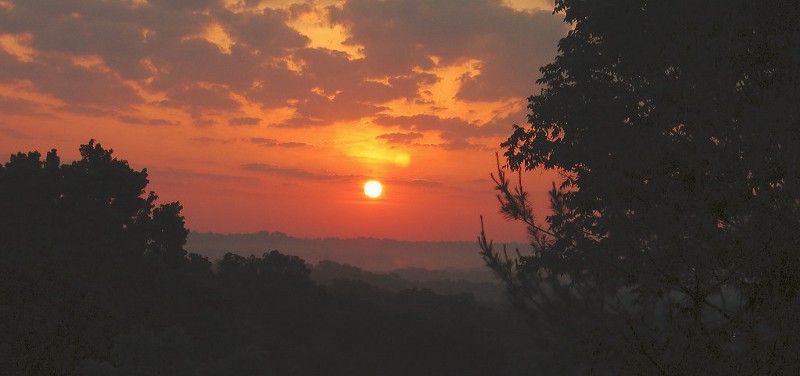
If I am stressing about something I am “driving” towards up ahead on my future day’s or life’s road, it is not only helpful, but wise to remember that I also should be looking in my rear-view mirror at what is behind me. I look behind me and realize, “oh, I did make it around that pothole successfully, even though I didn’t know it was there.” Or, “wow, I took that last speed bump way too fast which was kind of thrilling at the time, but I think I will slow down for this next speed bump ahead.” Or maybe, “that is a beautiful sunset and view, back there. I can’t turn around and go back myself, and I certainly can not turn the whole darn bus around for everyone else, but I can stop, and just gaze in my mind’s rear-view mirror, meditating on the beauty and joy that I and so much of the world, have traveled through.”
Looking at the past glorious sunsets and remembering successful points of view, can help us anticipate tomorrow’s sunrise, and find hope that the triumphant point of view of someone else traveling, just like I am traveling, will arrive, up ahead, just around the next curve.
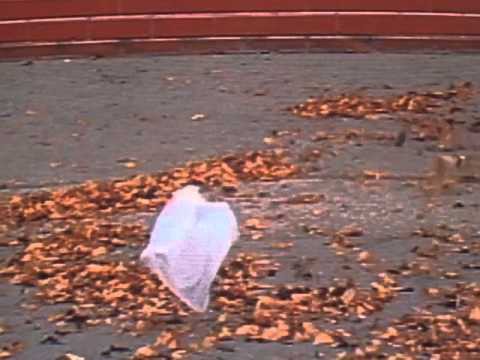
7. When you can’t doodle or write lists, draw pictures in your imagination. This is where I, a hopelessly horrible visual artist, can rise to the ranks of a Van Gogh or a Gary Trudeau, depending on the need. If you are stuck lying awake at night, imagine the ceiling as your canvas and paint your own “Starry Night”. If you are stuck looking at a podium or projected power point, become a Gary Trudeau or a Bill Watterson and doodle some cartoon characters in your mind’s eye (just remember to chuckle silently or you may get a dirty look or two). If you are waiting at a bus stop, figurative or otherwise, and foolishly forgot your book, don’t hop on the cellphone where more stress both mentally and visually lie in wait. Gaze at the scars and junk around you and create beauty. Remember that lovely scene in the movie “American Beauty”, when the plastic grocery bag becomes a thing of beauty as it floats in the breeze, and the character named Ricky, teaches us that this is proof that “there is an incredibly benevolent force at work in the world”. It is good to allow yourself to believe that if you can find beauty, you can find benevolence. Of course, then go pick up that plastic trash and give it a proper burial in your closest recycling bin.
Starry Night by Vincent van Gogh
Which brings us to:
8. Turn trash into beauty. This is a hard one for me, because I want to destroy trash, not find its beauty, but sometimes you can’t. However, I also find that allowing the trash to defeat my own peace of mind and inner beauty, allows both the real trash and my mind-trash, to defeat my inner fight for peace and joy. I sometimes can not stop my mind-trash from winning the immediate battle, but I can stop it from winning the war.
I have two friends, both of whom take old things like broken furniture or shards of pottery, and they take what would be trash to anyone else, and restore and remake it into beautiful, functional, and artistically joyful new things. I need to do more of this “turning trash into beauty” of the things in my mind, heart, and soul that weigh me down, give me anxiety, or stress me out. Turning trash into beauty also can work to get rid of stress when someone is trash talking; when you can’t turn off someone’s voice that fills you with pain or anger, or you can’t turn off in your mind what someone said to you or about you or on the television or whatever. The mind is a powerful tool and can be used to turn ashes into art, and trash talk into poetry.
We should not do this by ignoring the truth of the dents, mars, holes, or big “boo-boos” in situations, jobs, choices, or relationships. Sometimes, you have to see things for the un-fixable messes they are, cut your losses, and choose better and more wisely next time. But sometimes, you have to realize that nothing — absolutely nothing — from a piece of furniture to a job to a human being — is perfect and without blemish. We simply can not keep hoping for perfection and throwing stuff out or blowing things up until we find it, because perfection is an ever just- out -of- reach goal, not a gift to hoard or a trophy to claim. Perfection is a motivator and a dream, not an accomplishment or historical achievement. Recognizing this in the wee dark hours or the irritating or fearful or angering ones, can go a long, long way towards finding honest but benevolent ways to replace a desire for perfection with a desire for joy in the journey.
And sometimes we should remember that one woman’s trash, is another woman’s treasure. To accept the imperfections of others, myself, and the planet itself, means that beauty is in the eye of the beholder if the beholder is focused on finding beauty. Creating and retaining a cesspool or nuclear waste dump of thoughts in my beautiful mind should be no more acceptable than creating and retaining them in our beautiful world. Once I recognize a thought as trash, I should find a way to clean it up and clear it out.
“American Beauty” — Thomas Newman
Not a day or night goes by, usually, that I do not have to “give myself permission” to de-stress and practice habits of finding ways to re-join myself to all that is positive and valuable in being alive and in being human. We all need to take more time and more thought to restricting the bad and re-joying the good.
It’s a funny old world we live in. Perhaps it is especially a wacky-world for us who are privileged and yet confined by being First-Worlders; humans who live here, with not just great stress from without made by those who rule us, but stresses from within, and those, often of our own making. There is much to be done about all the things out there that make us fearful or angry or stressed-out, and we should not take our hands from the plows as we work to make the world a better, kinder, more beautiful place for everyone.
I long for a world where we are surrounded by people who automatically and quite naturally follow that universally admired but eternally just-out-of-reach Golden Rule; and by human beings who freely and joyfully treat other people with love, as they would like to be treated themselves. I yearn to find that kind of love within myself, not as a rule, but as a naturally occurring, deep-within-me, daily phenomenon and life-style.But to truly care for and act on behalf of others, we must practice habit-forming pro-active self-care and find practical, functional, as well as emotional and spiritual ways to “love ourselves, as we would like others to love us.”
Take the time, spend the energy, honor the Good in yourself, and as quickly as possible, clean up whatever is marring your beauty, peace, and joy in the journey. Love others today, by giving the gift of love to yourself and by practicing self-care. Then play it forward to some else.
Today, right now, wherever and whoever you are, Re-Joice in the best in all of us, past, present and future, and Re-Joy in the Journey.








 Jane Tawel