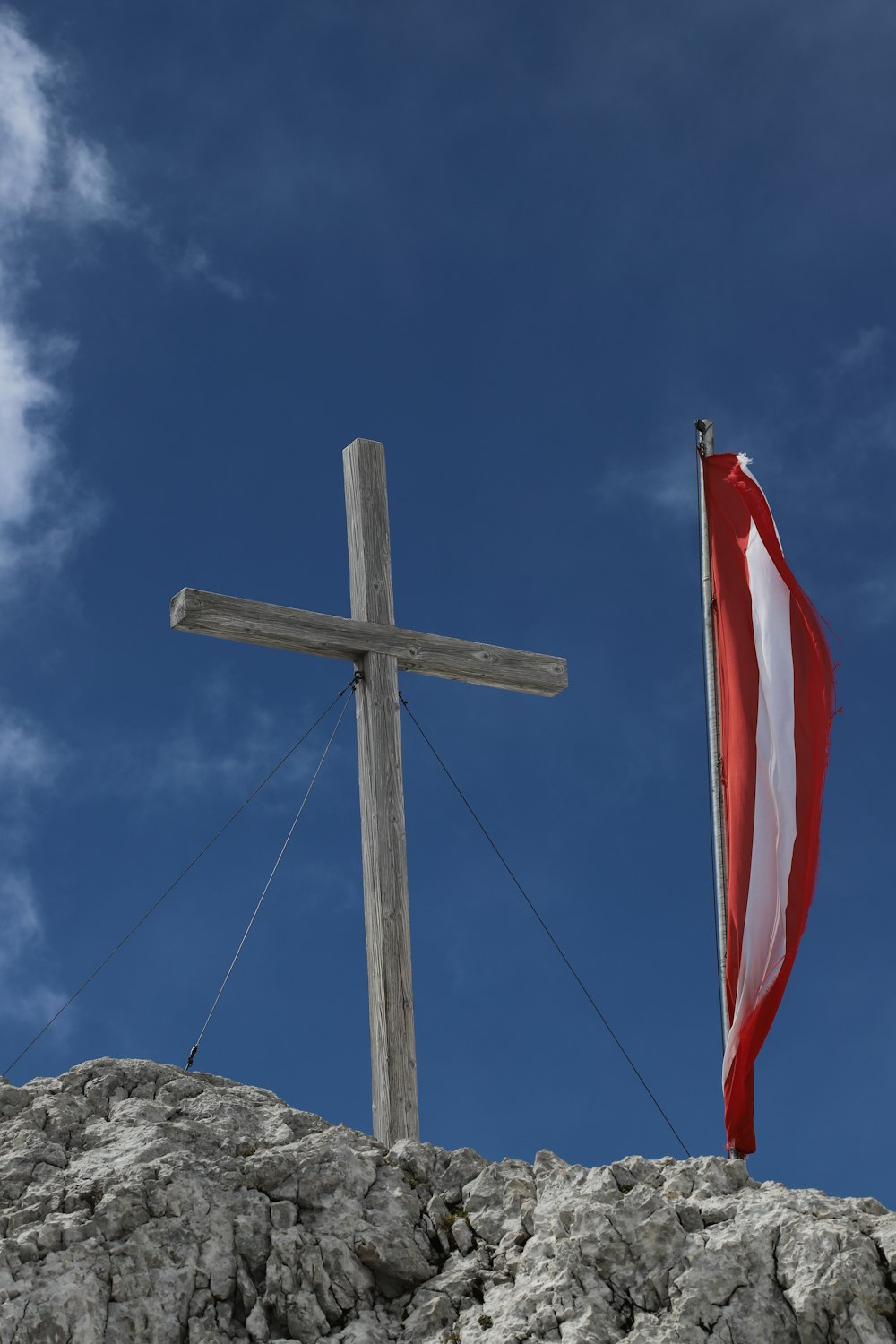
The idea of a creed tends to bring up religious connotations and perhaps because of that, the idea of having a creed tends to imply a status quo, a static belief system, and a do-or-die pact between like-minded people who join together over ideas that determine an “in-status” and “out-status” for anyone who does not adhere to the CREED (in capital letters).
*
A creed is defined as “a set of beliefs or aims that guide someone’s actions”. Sadly, to look at many of the religious or national creeds today you would have to assume that the last part of the definition has been irrevocably deleted, so that a creed is merely a “set of beliefs or aims”. No action required. On the other hand, many groups, communities, and religious or political entities, have creeds that imply definite action without the members of said group having any idea what those actions really and truly say about what they must believe to act in said ways. For instance, patriots who storm the capital are, to those who do not claim to be following the same creed, foolishly and blindly or willfully and grievously, acting on a belief system that is in fact quite the opposite of patriotic beliefs in a true democracy. Or take the example of someone who joins what is recognizably a religious cult. While all religions have cult-like attributes, the victim of a person or personages who create creeds around themselves in order to control and manipulate the actions of others for personal or group gain reveals the “clear and present danger” of man-made creeds. Because while we may belong to a church, mosque, or rotary or mason’s club, full of a membership that sincerely believes that our creeds are inspired, divine, good for the common good of the group, beneficent, helpful, unifying, heave-bound, or even “God-breathed”– the plain truth is, every creed is simply a human-made attempt to put into words their “beliefs and aims”. The supposed God-inspired or patriotically-sound attributes are by default, then, at risk of misuse, misinterpretation, and mistakes as all humanly-created ideas can be. It is good when looking at religious or national creeds to keep in mind that if there is a God, no one has ever completely understood or known the “mind” of said God. And secondly, no one, and this means No One, can take an historical creed, nationalistic or religious, or otherwise, and apply it perfectly, or even realistically and practically, throughout time and place.
*
So, what is my point, you ask? What is my “aim” in this focus on the idea of creeds? I have grown up in a world of specific groups of people, each of which group believes that we memorize and recite our creed or pledge in order to prove what we believe forever, and forever, in God we trust, America the Beautiful, and blah,blah,blah grace, liberty, and justice for all, amen. Hands on heart, or folded before us in prayer, we worship the idea of the words, without having to follow through with the actions required by saying we believe those words are guides to our “purposes, actions, and aims”.
*
Let me give you a simple reflection on two popular creeds in groups of people that I have belonged to. They come from creeds I have memorized and recited in front of groups of other people, solemnly and faithfully pronouncing the words and by doing so, implying with the rest of the people with me that I plan on living a life that adheres to the principles in that creed. The first example, for me, would be the “Pledge of Allegiance”, which I have memorized and which I used to recite (often under the duress of group-think begun in elementary school). (Disclaimer here: I no longer choose to recite the pledge of allegiance, finding its meaning opaque and faulty. You can read elsewhere in this blog, why long ago, for religious and spiritual reasons, I began to choose to stand respectfully during the Pledge of Allegiance, but not mouth these words of allegiance to what for me, had become an icon or an idol.)
*
America has some really excellent creeds, like our Constitution and our Bill of Rights, but our pledge to a flag, which is tragically for most people, the only American creed they have any real knowledge of, is not-creed worthy. And if you look closely, it more resembles a “bait and switch” than an important set of beliefs. To simplify this thought for now, if I am pledging my loyalty to a symbol, then I should understand what that symbol stands for, because of course a symbol is a GIANT container for BIG IDEAS. Tragically, I know more than many, as someone who has tried to teach symbols, metaphors, and other mind-expanding literary devices for years, the average person, whether a high-school drop-out or a Harvard grad, have little clue about the immense importance of and very real truths inherent in symbols, word-symbols and image symbols alike. Let me put it another way, when the American Revolutionaries were fighting for what they believed to be their freedom, the symbol of a flag and a pledge to support this flag were profoundly meaningful to give credence to their actions. For soldiers in any country who are fighting for their country’s ideals, a pledge said around the symbolic icon of said country can be an incredibly important and unifying way to more deeply and subconsciously understand the meaning of the actions of war. But that brings us to a different problem – when a flag represents merely a nation’s rights at any cost to other nations or people-groups, then we have put the horse before the cart, and we are acting first, and re-forming the intentions of the creed to justify the actions. This is the opposite of what a creed is meant to do. A creed is meant to provide borders around as well as guidance for actions
*
Of course, even sillier than thinking that a creed only needs to be about a piece of cloth we fly for national identification purposes, are those who have come to believe that singing a song before a sports event is creed material. And to make matters worse, most people don’t know the words to this “creed song”. And if they do in fact know the words, as I do, can they hit the high notes that are meant to soar our belief system into a heavenly realm? As a matter of fact, what has become known as the American national anthem, is merely an historical story-song, a hind-sight perspective, of how and when and who won our independence; an event that happened way, way back when. (Although in terms of keeping an historical perspective, compared to other nations and countries, America’s young hold on life should have given us a little more humility, but alas that has never seemed to be first and foremost among our brash, young nation’s traits.) The creed-song of our country in fact, holds no creed-worthy tenets and again, if one were led to believe that one should act on the belief system of said anthem, then once more we are reduced to believing that all Americans should care about is a piece of red, white and blue cloth and a song that we sing to worship sporting events.
*
From a true perspective of belief systems, if a person really knew what they were pledging allegiance to when pledging to the flag of America or singing the song of American freedoms, they would applaud those who take a knee rather than mouth some words, and join them on their knees in a fight for the “justice for all”. After all, that is what Americans say that we have pledged to uphold. And furthermore, rather than punish protestors, if we believed our national creeds, we would prosecute anyone – ANYONE—who incited people to storm the building that is the epicenter of those flag-creed beliefs; and we would remove from office those people who pledged allegiance to grant “liberty for all”. Because creeds can only take so much self-centered, ego-driven, or greed-tainted abuse and still have any rational meaning at all. Funny, how two people can claim to believe in and uphold the very same creed, and have such different aims and actions as a result of said belief. To see this even more clearly, one must look at religious creeds, which have become so written in stone over the centuries as to become the worshipped, rather than the worshipful. One only has to look at the recent abuse of creeds in both Catholic and evangelical institutions to see that our creeds can all too easily take the place of our God. After all a dead creed is so much easier to live by and with than a living God.
*
Just like everything ever written or orally transmitted to people and people groups, all communication has two important elements: Audience and Purpose. In creed-creating, one can see that one problem that is to be addressed is that an audience never remains the same. It doesn’t take a rocket-scientist or linguist, a founding father or theologian to understand, that if one accepts the changing hue, temperament, needs, and make-up of the audience, then a creed needs to be either flexible, or changeable. It needs to evolve, just like people and nations and religions need to evolve. If a creed is written for one audience, like a fledgling nation made up of other nation-groups, or a young religion made of up Jews and Gentiles, or for metaphoric purposes, let’s just say, if the audience was once a bunch of five-year olds, but now are a vast throng of twenty-somethings, or sixty-somethings, well, the creed you are asking everyone to base their beliefs and actions on, either needs to morph and transform and evolve, or you need to throw it out and start over.
*
The second example of creed-following for me comes from not my national identity but my religious upbringing. Now, take care here, because in my own beloved country of America, far, far too many people seem to have confused the nationalistic with the religious, making both the creedal tenants of a separate church and state ideologies, both tragically abused and ridiculously meaningless. But, as another example of creed-use and abuse, one particular religious creed that I have recited in unison quite a few times in a long, long life of church going, is called The Nicene Creed. This is a religious set of beliefs that was written (and rewritten) in around the mid 300’s A.D. by the religious leaders of the Christian Church; and it has ever since been accepted by all forms of Christianity, Catholic, Protestant, and Orthodox. This creed helps not only with understanding the interplay of intended Audience with belief systems, but the dangerous power behind Purpose in writing out a set belief system intended to inform actions.
*
The Nicene Creed is an excellent example of why, in order to understand the meaning of any creed or written set of beliefs, one must understand its purpose. In other words, to understand the WHAT, one must understand the WHO, but most important of all, one must understand and keep grappling with the WHY.
*
The Nicene Creed was written with the express purpose of “weeding out” and “gathering in”. It was written 300 years after the death of the supposed leader of Christianity, Jesus Christ, in order that the now powerful arms of the ruling class of bishops and “theologians” and paid professionals of the Church, could have a yardstick by which to measure if a congregant had a correct belief system or not. While the American documents of nation formation were written as a reaction to what had come before, they were also written with a great hope in what would and would not come after. The Nicene Creed, conversely, was written, not with a “hope and a dream” for a better world, like the American Declaration of Independence was, but the Nicene Creed was written expressly as a reaction AGAINST those who were questioning what had already become the status quo of a new religion. The Nicene Creed was written, as sadly, especially religious creeds often are, to protect the people who were in powerful positions and who “liked things the way they were”, in order that nothing would change what those in power had already determined the set-in-stone tenets of this new religion would follow. The Nicene Creed was written with the aim of ammunition against the threats that had arisen to the religion that had morphed out of the life, teachings, and hope of Jesus Christ, who never wrote a single document for us to use in the future, let alone a creed. One only has to look to the current year of 2021 to see how often we use creeds of national and religious institutions not to bring about meaningful and hopeful, productive change for all, but rather to prevent change and keep the status quo for those who benefit from the past, not those who need a foundation in the present, or a dream for the future.
*
It came as a shock for me to revisit the so-called standard bearer of creeds of the Christian religion and realize, that just like the American national anthem, The Nicene Creed, is not at all a creed – it is a written account of a group of beliefs about the history of the planet, the history of a man called Jesus, and the history of God. And like a crack over the head, I realized that all these centuries of reciting this creed and taking it as “gospel” has in fact, only led to one discernible aim and one obvious purpose – to believe this creed is to be “in”, “chosen”, part of “the correct group”; and to veer in any part of this creed, is to be “out” , a heretic, not one of the chosen group. And it doesn’t matter one bit, how those who recite this creed as a founding and important and even “Godly” document—it doesn’t matter at all how we act or live. We have reduced belief to intellectual assent and nothing more. We have reduced creeds to the level of secret handshakes or long-lasting party games (“party” has two meanings here). We have taken the meaning of what we call “faith” and reduced it not to a relationship with a living God or a relationship with the people we live with, but to a stagnant set of tenents, that barely effect our knowledge base, let alone affect our hearts, souls, or actions.
*
A creed can imply, for some brave and intrepid souls, an aim or an action. So, let’s say I still want to cling to my religious creed as something that should influence my actions. Let’s take some of the words of The Nicene Creed for example. If I actually believe for instance that “God is the maker of heaven and earth”, as my creed proclaims; then consequently, I should treat the earth as if it is God’s. If the whole earth, planet, people, trees, plants, animals, air, water – if all were made by a Supernatural Being that exists somewhere beyond the Earth but also within our World, and Who loves the whole planet as something She/He/They created, then how should I and my fellow creed-followers ACT? How should we, based on our creed, treat the Whole World, the created essence of Our God? Well, if actions speak louder than words, one would have to conclude as the inspired words found in James 2:14-26 does, that “faith without works is dead”.
*
To take a simplistic approach to deducing what I might mean when I say I believe in the ideas that have been written down in the Nicene Creed, let’s pretend I really did believe that when my group of fellow Nicene Creed believers recited this, we were joining together to commit to actions implied by the “beliefs or aims” presented in the words, and that by committing to the beliefs that would lead to actions we were also saying that we would hold ourselves and each other RESPONSIBLE for following through on how best to act on those beliefs and to LIVE OUT those beliefs in our community and in the world at large. If that were the case, what would it mean for me to say with others: “I look for the life of the world to come” and how would I act in order to live into a world that I prefer to the one we are making now?
*
A creed, to be any use or any good at all must be open to change, and in constant evolution, just like any group, or church, or nation, or club, or human being, should be. The ironic thing is that for a creed to be consistent, it must be open to new interpretations and new ways of living into the truths supposedly inherent in the written words. To be not only deeply true, but critically useful, a belief system must be a kind of oxymoronic foundation, that is both bedrock and solidly based in eternal truths, and also completely and eternally changing with the deeper understanding amidst the new realities and new responsibilities of the place and time in which humans live. A creed should be as evolutionary as every living thing in the created world actually is. What a person believes should be as grounded in what a person should be as nature is grounded to the Earth. To Be-lieve is to let my Be-ing, Live.
*
I have begun to look more intensely and intentionally, at the many sources of my own belief system and I have been humbled by the great writers, teachers, radicals, and most of all the “Do-ers” who have created the creeds that aim to guide us, both as citizens of the world and for some us, perhaps and hopefully, as “citizens of heaven”. And as I look and read, and reread, meditate, and grapple and struggle with these creeds, and find new creeds from other places, times, nations, and religions to wrestle with, I am trying to turn my telescope around the other way. I am trying to observe my actions, both current and past, and ask myself this:
*
What is my Purpose? What do my actions tell me and others about what I really believe?
*
What do I actually do to support the nation and community I live in, to the best of my ability in my understanding of what it means to be a good citizen with care and caring, and “freedom and justice” for all?
*
What do I honestly believe about my spiritual identity and the spiritual identity of my “audience”? What parts of my faith are “dead” and inactive? And how strong and true is the faith of my works? How much of what I say I believe is Alive, in connection with A Living God? Is the “Why” of who I am, leading me “further up and further in”, to bring Life and Be Life?
*
So I am, in effect, as all of us are, whether we know it or not, daily writing our own creed. We are either consciously or subconsciously, allowing new creeds to help us change for something that can simply be described as “better”; or we are allowing our fears and stubborn foolishness to keep us moored to the shoals of dead creeds, useful only for self-importance or a false sense of security and power. I began a little exercise, which I may write about later, but now is just a rambling musing and jotting down of ideas that I think I could look at as “My Current (but maybe not Forever, depending on revelations to come) Life Creed”.
I encourage you to try writing out what you think you believe to be foundational to your worldview, your creed. Then write out as many of your life’s actions that you can match-up to prove you have lived according to these beliefs. It is not for the faint of heart, but it is for those who desire a little humility with their hope today. I am finding as I meditate on this exercise more of the who of myself, more of the who and who not of my audience, and more of the Who of The One Who Is. I am also finding more of what the true connection is between my imagined purpose and my true purpose. I am finding that I really have never had much of an idea of what it all means in light of eternity, but that it is enough for me not to know some great purpose, as creeds would lead us to believe. It is enough for my purpose to Be me and to act in a way that I would like all humans to act towards each other. My faith can still be “the essence of things unseen but hoped for”; and my life creed can be the “peace that passes understanding”, the wholeness that means simply that I want to be active in whatever Goodness and Love are doing in the world, no matter whose creed is behind it.
*
I don’t know much, but I do seek for much more, and in that is, with a lot of grace, I believe, my salvation; for as that brilliant creed-buster, St. Paul wrote:
For now we see in a mirror dimly, but then face to face; now I know in part, but then I will know fully, just as I also have been fully known. But now faith, hope, and love remain, these three; but the greatest of these is love. (I Corinthians 13).
And any creed without Love at the center is no creed worth following. And Love is always the Ultimate Creed.
One Thousand and One Things I Should Be Doing to Make My Life More Meaningful
(But For Now, Here are Five)
By Jane Tawel
March 31, 2021
Now that I am of an age, there are regrets, of course about wasted time and wasted energy, wasted dreams, and wasted relationships. But of course, looking back on regrets is worthless if I can not use them to make myself, or at least just my day better. With hope and a bit of luck, maybe I can even make my “Tomorrow Me” much better. You know the one I’m talking about; that Person that Tomorrow will be all those things She is meant to be.
Yep — hope springs eternal that with a little elbow grease and grace there may be within my life a confluence of context; a critical combination of conveyances to convey more meaning to my existential essence. Ah, that “thing with feathers”, that beats within, giving meaning even to the falling of a sparrow or the timely chirp of a chirpy-bird, that excruciatingly human attitude we call, “hope” shows up “asking nothing at all” but to remind me that The Greatest Meaning of All has created my being to seek and live out and unto others, a life of meaning.
Of course, maybe you are not like I am, always wanting to add more, je ne sais quoi? Maybe you are a girl who just wants to have fun*, or a just an ordinary average guy* (*song allusions intentional). But I am that “sort” — one of the ones who desire more sense, connotation and denotation, elucidation, substance, significance, more purport and implication. As Francois Rabelais might say, “I go to seek a Great Perhaps”.
I think when you get to be my age, you want to find more meaning than you are used to because maybe you are more sorta kinda okay with the uncomfortable pauses and the untidy questions. That seems silly maybe? Maybe it is the young who are truly seeking, searching, defying, rebelling, hating, loving, and jumping into life to find true meaning, big meaning, small meanings, ultimate meaning, and just the meaning of choosing to make sustainably-grown-coffee-at-home meaning. I don’t know but I fear the young ones have been led astray that finding meaning is a waste of time if it takes them away from working towards success. I hope I’m wrong.
I fear the young ones, my own dear adulting children included, are a little afraid of using the best time of their lives wisely, not by being smart, but by being curious. I know I didn’t know how important that was when energy was in excess. And that word “use”– goodness what a horrible word “use” can be. I talk about how we “use” time but that is the Great Lie, the fallacy perpetrated by bosses and kings and a chimera of meaninglessness, followed like a mirage, like a Pied Piper — just up ahead — almost there –keep marching — one-two, one-two, one-two –struggling on scraped and banged up hands and knees towards an idea of Time we never reach. Meanwhile all there is to be seen on the road, all the glory that hides in bushes in weeds along The Way, that we speed by or plan to come back to someday, is ignored. But as Robert Frost reminds us, whatever road we take, whether the one less taken or the one equally fair, we can’t keep the time we spend for another day.
Time is not useful. Time is the dream. Time is not to be pulled and pushed like putty, nor molded like play-dough, soon to be flattened and reshaped in a new Monday, a new Tuesday, a new Wednesday and on and on and on. No, Time is to be coddled like the new-born infant it is each time we awake to it and each night when we put Time to bed. Time is to be caressed like the Lover we dare not take for granted, or it will leave us, deadened and dried up, longing for that first love of Time when we were young and thought we had all of it we could ever desire. Time is not a hive where we all, like worker bees, continue to stay busy, busy, busy, buzz, buzz, buzz, making honey-money for someone else, some other day, some storage unit dripping with nectar we never take the moment to taste and enjoy. Time is the thing that separates us from the birds and the bees, the essence, not the effect, the hint that our humanity is not created to be a slave to time but a partaker of The Dance of Timelessness. My search for meaning is, at heart, a search for how to give Time its due, to return to Time my love and to honor it for the precious gift it is.
Now that I am old(er), I hate how much time I wasted but more than that, I hate how much time I waste on a daily basis. I don’t mean I hate having to work a job; I mean I hate thinking about how much I hate having to work a job when I am working at my job or even when I am not working my job. I don’t mean wasting time watching a show or reading a book; I mean wasting time watching something or reading something that isn’t edifying or inspiring or at least just plain darn well-done or good-fun. I don’t mean I hate wasting time talking with other people or doing stuff for other people; I mean I hate wasting time not really listening to people I care about; I hate doing stuff for other people because I “have to”, not because I love the fact that where there is life, there is still the ability to do things, to give something, to share or sacrifice, or even just to plain do the darn dishes for someone else. I hate wasting time thinking about politics and everything wrong in the world; instead of skimming the headlines and then thinking about what I can do to make the world a better place.
So though I wish every day I could expand time to do one thousand and one things more to give my life meaning; here are at least five things I am becoming, no I am committing to make myself, more aware of in order to try to make my life more meaningful. Just five to start with out of a thousand and one to seek and find, learn and love, and hold and share. They are little tiny things, and you don’t have to agree with my choices here, but I hope it will inspire you to find those small things in your own life that you can look and tend to, cherish or change, and give more meaning to who you are and where you are journeying in life today.
As the Ecclesiast says, “there is nothing new under the sun”, but that is also the amazing thing about time and the search for meaning — we share the passage of one and the search for the other with our ancestors. I hope we can learn to better preserve the preciousness of Time and impart the purposefulness of meaning for our future children.
Five Little Meaningful Things on My To-Do List Today
1. See, hear, touch, taste, smell. In other words, although words can not truly describe the quality of our five senses, I tend to think Fritz Perls had a point when he said, “lose your mind, come to your senses”. I just plain think too much. Life would have so much more little special moments of meaning if I just enjoyed whatever sense I happen to be using at the time.
Look and wonder or discover. Listen and take the sound into your heart, whether it is the sound of a friend speaking or the sound of a cricket or a bird singing. Enjoy the amazing ability to taste food from the time it touches your lips until it reaches your belly. Inhale a scent and let it settle in, making itself a mysterious acquaintance. Perls, the psychotherapist who discovered Gestalt Therapy believed that humans are a wholistic entity, consisting of body, mind, and soul. He was a great one for understanding that when we view ourselves in the moment, through our own eyes, and not by looking back into the past but by bringing the past into the present, we become more whole. Focusing on using our senses goes along way toward reviving the mind and soothing the soul.
2. Do it with purpose but not always purposefully. There doesn’t always have to be a goal to achieve when we do something. In fact, we need to do more things more often with no other goal than joy in the moment’s journey. For me, the example would be humming or singing. I find I am one of those people who just hums all the time, like a crazy person. But I hum, well frankly, just dopey sounds that do comfort me, I guess, and activate that old Vagus nerve, but I am trying to make this a more meaningful meaningless exercise in my life. So, whenever I find myself humming some stupid syllabic scales, I try to “change my tune”.
Sometimes now when I catch myself humming nonsensical garbage, I make myself focus on the fact that I believe all of life is spiritual and that the Divine is present; so I’ll hum something like “Be Still My Soul” or “For the Beauty of the Earth”. Sometimes however, I will hum something that just makes me happy, like Mr. Roger’s “Beautiful Day in the Neighborhood” or “Feeling Groovy”. Sometimes I make myself hum something that is fun and has the added advantage of bringing to mind a memory of someone dear to me like when I hum or sing my dad’s old stand-by “You Get a Line and I’ll Get a Pole” or I sing something I used to sing to the kids in our big bed at night like “Five Little Monkeys Jumping on the Bed” or “On Top of Spaghetti”.
If you are not a hummer, I highly recommend it, but if it’s not for you, find that thing you do that maybe seems meaningless, but could do with a little attitude change directing it towards meaning. For instance, do you, as I have always done, play with your hair? This habit drove my mom crazy for some reason, but I realize now that it was a comforting technique. Do you have a habit you do that comforts you and doesn’t hurt anyone else? Then do it with meaning. If you are a hair-stroker, stroke with contentment and really feel the silky strands or crunchy curls or just be glad you still have hair to fondle! Maybe you are a “tapper”. I taught a lot of students, especially boys and young men, who were “tappers”. If you are a person who taps with a pen when stressed about a test or taps when you are working on a project or taps mindlessly when you are trying to keep your cool or patiently wait or someone who just enjoys the sound of drumming, then — tap with meaning! Do a drum beat and make your own rhythmic music. Mix it up a bit and see what happens if you use your other hand to tap out some beats. Let yourself feel primal and connect to the age-old and ancient art of beating. Whatever you do, tap to the beat of your own self-be-true.
We should remember when it comes to these habits or seemingly meaningless activities that we can give them meaning if we recognize they reveal something about how we are created and how we exist between the natural and the sublime. As animals we often unconsciously make sounds or fluff our feathers, but as humans we can consciously create and we can imbue with a greater meaning, those instinctual or habitual actions. We don’t have to be consciously purposeful all the time, but finding more meaning even in the instinctual or habitual can bring us unexpected enjoyment in random creative acts. We are those beings who can create our own delight or pleasure or calm, even in the boring, mundane or stressful.
3. Breathe. How many times do we have to say it? hear it? preach it? I am so sick of people telling me to breathe and breathe deeply, but the fact remains, we have just stopped breathing deeply. At least in my Western, uber-get-ahead culture, we decided as a species we no longer could waste time breathing deeply, feeling our chests rise and fall with the intake and out-take of air, enjoying being alive because our lungs work or our lungs are healthy. Ain’t nobody got time for that, man! Breathing is such a waste of time. So, we will do the minimum to stay alive and leave the deep breathing to babies and monks.
If you didn’t have Covid issues this past year, thank God or your lucky stars, but for those who did or suffered with someone who did and who had trouble breathing, it is one of the things this pandemic should make us grateful to be able to do. Instead of just shallowly breathing the way I have gotten used to doing it, as a rote bodily function for merely staying alive, breathing with attention, with a bit of meaning in it, is my goal to do at least as often as I can.
I breathe deeply for the sheer enjoyment of being able to do it, and for any of you spiritual folks, like I try to be, we should remember: there is a divinity in breath and breathing. The Divine is often pictured as revealing to us a holy spirit encountered through our breath. Without breath, no life; and without life, no meaning.
4. Stop complaining; Start Maintaining. This poem by Gunilla Norris is about the paradox of maintaining and her words and thoughts are more eloquent than I could ever express.
Paradox of Noise by Gunilla Norris
It is a paradox that we encounter so much internal noise when we first try to sit in silence.
It is a paradox that experiencing pain releases pain.
It is a paradox that keeping still can lead us
so fully into life and being.
Our minds do not like paradoxes. We want things
To be clear, so we can maintain our illusions of safety.
Certainty breeds tremendous smugness.
We each possess a deeper level of being, however,
which loves paradox. It knows that summer is already
Growing like a seed in the depth of winter. It knows
that the moment we are born, we begin to die. It knows
that all of life shimmers, in shades of becoming —
that shadow and light are always together,
the visible mingled with the invisible.
When we sit in stillness we are profoundly active.
Keeping silent, we hear the roar of existence.
Through our willingness to be the one we are,
We become one with everything.
— Gunilla Norris
People used to use phrases like “maintain your purity” or “maintain your integrity”, but now we don’t have much use it seems for maintaining things any more, in our easily disposable world of everything from disposable fast food containers to disposable relationships. The title of Norris’ poem reminds me that we too often let our inner lives become as distractingly, irritatingly noisy as is the constant noise we have to endure in our outer lives. But we have a choice about letting so much noise rule our inner beings. Stopping negative thoughts is one good way to begin to make a courtship with silence and to nurture a peaceful inner environment.
The Norris poem coaches us to see through the charade of complaining and to recognize that maintaining illusions of safety by needing things to be clear or black or white even just wanting to understand a thing or a person, are just that — not quite what they seem — illusory. We humans are the greatest paradox the world has ever known; demonic and angelic, foolish and brilliant and wise; fearful and brave; selfish and sacrificial; hateful and loving; anxious and peaceful; greedy and generous — we are paradoxes alone and a paradoxical community of beings and all of us are everything and nothing and it is rarely if ever as clear-cut as we make it out to be.
To stop complaining means to understand that the mystery of anything is much more holy and desirable than the knowing and owning of something or someone. To maintain an even keel through life’s ups and downs, is to keep balancing the teeter totter of one’s existence daily; flowing back and forth; swinging in the pendulum of the glorious idea and ideal of being fully and incredibly human. “For we are fearsomely and awesomely made”. Human maintenance requires a great degree of bravery in the face of all we do not know. Complaining is an unworthy shield to hide our fears behind, fears of sallying forth into the battle and possibly being victorious. We will never know until we put away the things of a childish attitude, and take up the things of an adult. Giving up grumbling leaves a pretty large, wide open field for all the things we can take up instead to do with our feelings and thoughts.
5. Be Yourself. And yes — here one must add the old standby — because everyone else is already taken. And isn’t that wonderful! Think about how many “everyone elses” there are for each of us to get to know! And seize hold of the idea that you are unique and that that it is not only just “okay” to be who you are, but it is wonderous and inspiring and you are so very, very needed in the world because there isn’t another You.
No one else can connect the same dots of a life to make a “me” in the same way I can — it is exponentially impossible. Like a pointillism painting, my own specks of a life come together to make something uniquely lovely and meaningful.
So today, I will try not to let anyone, including myself be unhappy with who I am. I will accept I am not perfect, that I need to make changes, and that there are some things that need work. But I will find meaning in the fact that I am Wholly Me. And that is a Me-aning worth living and worth loving.
As Robert Louis Stevenson wrote, “To be what we are, and to become what we are capable of becoming, is the only end of life”. The Great Perhaps becomes the Great Purpose when we choose to make meaning however, whenever, with whomever and whatever we can. It is our great Why and all meaningful moments make the Why the raison d’etre. What is the reason for my being today? The answer is simply and profoundly complicatedly — my life.
To get more meaning out of life, we don’t need a thousand and one ways. Starting with one or two will do. Again, I must turn to poetry to distill the important “stuff” about life. Henry Wadsworth Longfellow wrote the following about the meaning of our lives and the title alone gives me joy in the journey and meaning for The Way. May it be a Psalm for your life today as well.
A Psalm of Life
By Henry Wadsworth Longfellow
What The Heart Of The Young Man Said To The Psalmist.
Tell me not, in mournful numbers,
Life is but an empty dream!
For the soul is dead that slumbers,
And things are not what they seem.
Life is real! Life is earnest!
And the grave is not its goal;
Dust thou art, to dust returnest,
Was not spoken of the soul.
Not enjoyment, and not sorrow,
Is our destined end or way;
But to act, that each to-morrow
Find us farther than to-day.
Art is long, and Time is fleeting,
And our hearts, though stout and brave,
Still, like muffled drums, are beating
Funeral marches to the grave.
In the world’s broad field of battle,
In the bivouac of Life,
Be not like dumb, driven cattle!
Be a hero in the strife!
Trust no Future, howe’er pleasant!
Let the dead Past bury its dead!
Act, — act in the living Present!
Heart within, and God o’erhead!
Lives of great men all remind us
We can make our lives sublime,
And, departing, leave behind us
Footprints on the sands of time;
Footprints, that perhaps another,
Sailing o’er life’s solemn main,
A forlorn and shipwrecked brother,
Seeing, shall take heart again.
Let us, then, be up and doing,
With a heart for any fate;
Still achieving, still pursuing,
Learn to labor and to wait.
May we learn to love “acting in the living Present, heart within, God overhead” and may we each find joy in our own very unique journeys towards a more meaningful, wonderful life. Yes, we can make our lives sublime.
Because I just had to on this one, let me just say: About the hullabaloo on the six Seuss books, none of which are my favorites and probably aren’t anybody’s favorites anyway. It is the Dr. Seuss Enterprise itself removing a few of the books because of stereotypes in the drawings that were once accepted and now are hurtful and seen as prejudice-causing. This makes Dr. Seuss the protagonist in this story. Now about the antagonists.
Whatever the heck do people think they mean by “cancel culture” of which term is just another labeling devise I have no desire to understand. Children should be protected by parents as they see fit, no matter the genre anyway. And we should all want to help children be better equipped for the future of living and loving and growing together than their parents were. That’s called “love culture” and “progressive culture”.
When children grow up, they will hopefully have been educated to make their own better and best decisions, apart from whatever “culture” is prevalent in their home or their neighborhood. Children will still enjoy all the classic Seuss books for many years to come, I have no doubt, and learn the important lessons many of those books teach besides how to read. I hope children also learn from the Dr. Seuss Enterprise’s decision to do the right thing at the right time. I don’t really understand this whole labeling of things — if something in any one’s, nation’s, religion’s history is now no longer, as Phil. 4:8 says, “true, noble, right, pure, lovely, admirable, excellent, praiseworthy” then we should as moral, ethical caring- for -other -human beings let it go into the past and be honorably or dishonorably buried there. That’s not censuring, that’s not banning, that is not taking down important monuments. That is simply doing the right thing at the right time for the right reasons.
I think some people need to stop letting their hearts be three sizes too small as if Seuss’ Grinch were autobiographical and imitate the protagonist in my own favorite Seuss book, “Horton Hears a Who”. Because folks, “a person’s a person no matter how small” and sacrificing as Horton does for the smallest, weakest, and most vulnerable in our midst is what makes true heroes and heroines, no matter who is writing the stories.
If only they had listened to Jefferson: “The idea of amending constitutions at regular intervals dates back to Thomas Jefferson. In a famous letter, he wrote that we should “provide in our constitution for its revision at stated periods.” “Each generation” should have the “solemn opportunity” to update the constitution “every nineteen or twenty years,” thus allowing it to “be handed on, with periodical repairs, from generation to generation, to the end of time.”(The New Republic)
Lately I have realized how little I know about how things “should” work in my own nation and how they “do or don’t” work comparatively. I completely agree it is time every citizen was more educated in civics and through that education that the people are heard in terms of changes that need to be made yesterday. We must ask ourselves — when does a document like a government charter (which is what our Constitution is) become an idol to worship and not a tool to use for the good of the people? There are a couple other idolized documents I can think of that we should be better educated in and asking these questions about as well, but that’s a whole other can of manna.
As Jesus, the brilliant student of Torah law and the expert in the government charters of Israel said, we are meant to fulfill and live out these truths as guides, not worship or desecrate our written guides by our inability to change and be changed by “these truths that God and humans hold self-evident”…. We will be thinking about the story of that great statesman Pilate soon and his sad, sarcastic, narcissistic and oh so telling question that he asked of Jesus: “What is Truth?” We should not put up with our officials today asking the same thing — we should be the answer — We are the Truth of which you are merely the temporary guardians of.
To riff on an oldie — instead of “following the money”, we must start to “Follow the Truth”. And the questions are always the same for individual, community, and nation: Who do we want to be? What are we called to do? What changes do we need to make to be and do that which is our highest calling?
~~ Let’s do this, folks. Let’s help each other. I know I could use it. ~~Jane
I fan the flames of faith to believe there is One Who cares for us.
I breathe out and in and feel the warmth of the blood that flows through me.
My heart still beats as evidence that life is anticipatory.
There are those whom I long to be with and those whom I hope to know better.
Wisdom and knowledge are waiting for me to discover them.
Goodness lives beyond place and time and Love is forever alive in the Universe.
This tiny taste, this small sound, this faint feeling, this sweet smell —
are each and all worthy of my honored attention.
Taste and know that life is delicious.
And while I can still see anything, I can imagine everything.
*
Friend, hope is here for the taking. No matter how dark it may feel, take hope in your hands today and make something — even something very small — but make something beautiful to light your way.
I got in trouble once teaching at a “Christian” school (my family reading this is thinking right about now, “only once?!?”). Well, I did have issues with a few of the places I worked at (yes, plural). I had a hard time shutting up about the fact that so many people at these “Christian” schools thought by sticking a label on ourselves and calling ourselves “Christian” or “evangelical” was enough. (You will get tired of my constantly putting quotation marks around the word Christian, but if you know anything about the differences between Christians and “Christians” or the differences between The Christ and “Christianity”, you will possibly understand why.) So, yeah, I didn’t mean to stir the waters, but I did mean to stick my oar in. I just couldn’t get around the fact that so many people wanted to label themselves “Christian” but at the same time felt that the label in no way should be allowed to effect their behavior or address the inconsistencies in their proclaimed and overriding worldview.
Don’t get me wrong, labeling one’s institution by a religious nomer is quite helpful. After all, how else do we get out of paying taxes on a business venture but still make sure it doesn’t matter if what we do or say is inconsistent with the worldview of that religion? But in terms of calling something “Christian” and actually letting it effect our relationships, our community, our ethics, our behavior, our systems, or our worldview, well, that all depends on whether you toe the company line and support the right team. It often depends entirely on whether you give a lot of money to said “Christian” institution or whether you are picking up on the current political trends. And sometimes, “Christianity” is reduced to the lowest common denominator of whether you are posting the currently accepted FB meme du jour.
However, it usually seems to me far too consistently, I am sad to say, that the most vocal and accepted formation of the religion of Christianity, at least here in America, has very little to do with the worldview as presented in the Bible and even less to do with the life of the guy we all claim to have gotten our name and lifestyle and beliefs from — The Christ. At any rate, actually living the life or comprehending the consequences of saying we want to follow Jesus, doesn’t seem to be part of the current trend in “Christianity” ala American worldview. Fun fact about this idea of “worldview”. I was told at one Christian college I was teaching at, that I shouldn’t use the word, “worldview” any more as young people no longer understood what that term meant. Call me flabbergasted, because I actually thought one reason I and others are hired to teach, is to well…. teach. And I actually had the nerve to think that when one is hired at a “Christian” school one is expected to have an understanding of what different worldviews are and what we are agreeing upon together are basic tenets of our own unique worldview.
So, yeah, I guess I got in trouble a few times or more for thinking out-loud. I have a problem. My mouth or the words I type on the computer just fall headlong into truth-telling. I just so darned often seem to have no control over the truth being blurted out. I have been told that speaking the truth is rude, judgmental, “unchristian”, and not nice. And when someone calls me one of those things I know I must be finally doing something right, because the guy I’m supposed to be following, The Christ, was rude, judgmental, definitely not Christian, and very often not at all nice. So anyway, about that one time…
I was an English teacher who also happened to be teaching a Bible class and I mentioned that one of the major themes in both Literature and the Bible is that of the conflict of Good versus Evil. And you know what? I got called into the administration and was sat down before the Sanhedrin, I mean, before the “evangelical” men and one token woman leading the school and they, with all the saccharine sweetness that unthreatened powerful people can always muster told me that I really shouldn’t use the term “evil”.
After I cleared the flies out of my dropped open mouth, I did let what I thought was an obvious truth pop out: “Isn’t the reality of Evil versus Good sort of the point of the Biblical worldview?” I didn’t actually understand their response through their hems and haws, so I can’t tell you what their counter argument was, but it didn’t matter for long; my days as a “Christian” there were numbered.
I was eventually let go from this school and one other I was actually an adjunct professor of at the time for allowing students to discuss the incompatibility of their Christian beliefs with newly elected Donald Trump (Who knew “Christians” had to believe in Republicanism no matter who the Golden Calf at the helm was?!?!). The other school couldn’t come right out and tell me why they let me go, but I was told by one of my few friends there, that the straw that broke their camels’ backs was that I had allowed my class to make a statement about gun violence in America by joining in the nation-wide School Walkout and Moment of Silence after the Parkland shooting (who knew that “Christians” had to be NRA-worshipping, do or die (literally) gun rights supporters?!). Well, Duh! Obs, not I!
I was clueless, and still am, because I honestly can not get my mind around the fact that helping each other see where we might have gone wrong is not kosher in today’s “Christian” circles (oh, that was fun to combine a Jewish term with the word Christian). Speaking truth or disagreeing with the in-crowd of “Christianity” in America today, is considered judging. That is you are judgingif the person you are trying to speak truth to labels himself a Republican Evangelical Christian and you are not one of those things. Or if you refuse to turn the Bible or Christian creeds into a referendum on American nationalism. And believe me, there is nothing worse, other than supporting a woman’s choice, than a woman who knows something about the Bible and Jesus and thinks it ought to effect how she lives.
But be of good cheer! You too can make judgement calls if you have correctly labeled yourself. It is NOT considered judging if a Republican is judging a Democrat or a person who was raised “Christian” is judging a person who was not raised Christian. It not considered judging if you are comfortable and you are judging someone who is struggling to make ends meet on minimum wage. Neither are you considered judgmental if you are a white person judging a person of color. None of those things is judging. And that is just the plain, real facts, folks, not the double-dirty-down claims presented by the fake media.
I guess a lot of what I keep hearing real “American Christians” believe and preach is not part of what I keep understanding the worldview as presented by the Bible and Jesus are. I guess that would make those things I keep thinking are the fundamental truths of a Christian worldview, actually in fact, just the claims of the fake Jesus, right? I mean, you couldn’t honestly be expected to believe in the actual words spoken by the actual Jesus or even attempt to follow the actual life lived by this actual person called Jesus, The Christ. I mean, c’mon? How would a real American Christian even begin to take seriously the radical Jew named Yeshua without a check account to his name, with a following of people who didn’t carry guns and wouldn’t know a smorgasbord from a water-boarding, and who began life from the wrong side of the border and ended it as justly executed common criminal? #notourAmericanJesus!
I honestly don’t recognize the “Christianity” of America today. I certainly don’t remember it being anything like this when I was first learning about it in the Sunday Schools of the Midwestern plains, in little churches where everyone knew everyone else and didn’t just see each other on Sundays but all week long too. Today, even the people I know who personally grew up right along side me in those same churches, are angry and entitled, afraid of some unknown changes they can’t control; they are prejudiced but unable to admit it, and they are convinced that America, not God is the foundation of their belief system. I understand all of that, and of course everyone, including I, have every single one of those issues. But what I can not understand is how they can keep using the Bible and person of Jesus to defend those attitudes when the Bible and Jesus are meant to change those attitudes in us. Jesus taught us that we should only let ourselves stay angry about injustice. He taught that if He, the Son of God was not allowed to be entitled, none of His followers were either. Jesus believed that every single human being was worthy of being called a child of God, that the true way of living in God’s Kingdom kind of Life was much more available for the sinner, the broken, the weak, and the minorities.
Jesus was quite clear right before he was put to death by Rome and the Moral Majority of his time, that there is no nation that belongs to God; there is no nation, state, or congregation that is “of this world” that is his kingdom. No, the Kingdom of Jesus and his followers is “not of this world” because those who want to live in The Way of God do not use fear, or anger, or entitlement, or prejudice as the means to bring about their ends or justify their beliefs. Jesus taught us to start living right now in a different kind of kingdom, a different kind of nation, a different kind of synagogue or church, a different kind of community. He taught us to be a very different kind of friend, neighbor, and enemy. And I just am gob smacked to know so many people who seem to have forgotten that; or who have decided they would rather have something else, some Golden Calf to comfort, some idol who has flesh and blood to follow, and tragically, some enemy they can hate and try to over-power. And often that enemy is merely a neighbor with a different label than they have given themselves. But they still think they are following Jesus. So the real question is, as Jesus asked his own disciples, “Who exactly do we think this Jesus person is?”
I mean, at some point way back probably about the time of the Crusades or the Inquisition or maybe as recently as the formation of the Moral Majority, most people just accepted that they didn’t have to actually follow the teachings of that wild-eyed, crazy Jewish Rabbi / Guru (who can’t have really been Jewish because he was “Christian”, right?). It must continually be such a relief to those in the current religious majority who want to label themselves, “little-Christs”, that the operative word is “little”. Just a little dab of Jesus will do ya’, as the old Brill Creme commercials used to assure us. People must just thank the God of the Hebrews (that old Jewish God that they no longer need since Jesus came along) that though basically Jesus came to show humans how to live, he never really expected us to do it. Just like that old God never expected Adam and Eve not to eat from the tree, or expected that the Hebrews would actually live-out the ideas for the perfect earthly community He gave them the instruction manual on.
Jesus very kindly got himself killed so we wouldn’t have to accept any responsibility for our actions as long as we said we believed he was God and that he rose again so we can go to heaven. If we said a little prayer and go to the right church and think it’s okay to kill adults and children but not fetuses, why, we are all set for a Christian America and a future Heaven some where far away from the planet we are destroying. And unless you are a big mouthed non-labeling person like I am, then it seems you don’t need to worry about any future or current judgment of your actions. I can’t quite figure out though, how today in America it seems that you can’t be judged if and only if, you vote Republican and attend church on Sundays even during a deadly pandemic. And I have noticed that as long as we keep paying salaries to the professional teachers and preachers who run the company businesses of Christianity and toe the trending company line no matter what those famous important rich “Christian” leaders do or say, then we’ll be okay; I mean after all, those top dogs do so much for America, they are national treasures. I mean, it is almost as if they are the Pharisees and Sadducees of Jesus time come back to life to guide us.
Thankfully, it doesn’t matter at all if any of this, or any of our current beliefs are completely incompatible with what Jesus or the Bible from the beginning in the book of Genesis to the end in the book of Revelation says is the real truth. We have gotten just too smart to buy into what the Bible and the Life of Christ reveals about human nature and the world of the Divine. We certainly are not meant to give up any national or individual or denominational power we have worked so hard to achieve. There is no way we are expected to be both American and humble servants of all. (Jesus was only one of those things, by the way.) No, we are not expected to change or be changed. That is a worldview, and we don’t believe in worldviews any more.
I recently splurged and bought myself “The Complete Jewish Bible”, a version by David H. Stern, who calls himself a Messianic Jew. That amazing and beautiful version of Tanakh and New Testimony is a great discussion for people much more knowledgeable than I. But each morning as I read it, I find myself tearing up as the names for God and God’s people, including Yeshua, The Jewish Messiah appear in my meditation. I have written before about the dangers of people who worship a book instead of a living God who changes with our understanding and Who is always Mysterious Being, not pocket-sized easy to please and control genie nor raging, abusive male household-leader nor national god who works through the powerful and mighty so that they may be treated like gods themselves. But the Bible is an ever surprising, shocking, glorious minefield of Vision. It is replete with spiritual guidance and dire warnings. It has story after story of human beings who tried to be good and failed, and those who were quite bad and failed at staying bad after God got a-hold of their hearts and souls. It has poetry and imagery that never fail to inspire and delight, sober-up and amaze. And it has the story about the strangest human who ever lived who believed that every human being would be happier, more fulfilled, safer, richer, and better if they lived just as strange a life as he did and his name was Yeshua, Jesus, Jewish Messiah, Westernized as The Christ.
The book that Jews and Christians alike read as religious requirement and personal counsel and enlightenment uses many different genres to achieve one singular end — to shape the reader’s worldview. That Judeo-Christian worldview, even before it was all written down and put into a book has been affecting and infecting the world since the beginning of Time. It is the only worldview that matters no matter what one calls one’s religion or lack thereof. Most people don’t follow it, many people don’t know they follow it; many people know nothing about the religion or book that best describes it; and every human alive except for Jesus fails at living it. I fail at understanding it, having faith in it, believing in the best of it, and definitely daily fail at doing it. But good golly Miss Molly! I still believe I should try. And when I fail, I believe people who care about me should judge me so I can learn what to do better. Because that is the expectation — that God sees we are imperfect but believes that tomorrow, we can do better.
My many ex-students were “forced” to learn a term from me and most of them giggle now whenever I remind them of it. The term is “Judeo-Christianity” and it is my “worldview”. Many years ago, I began to realize that I wasn’t reading like other people seem to be doing, the book that Jews and Christians call their “Holy Scriptures”. And then once I realized that, I of course, realized well, yes there are many people of many different faiths and some of no religious leanings at all who read the things collected in Tanakh and Testament in the ways I was trying to read them. Years ago, long before the recent morass of confused morality, I secretly stopped calling myself by the same label that others did when they called themselves “Christians”. It had become offensive, through no fault of its own; and it wasn’t offensive in the ways that Jesus was offensive. The Christ, who said things like “hate your parents compared to how much you love me”, meant it to be offensive. He got that from His Heavenly Father, who is so offensive in His insistence to let the sun shine and rain rain on both the good and the evil. Jesus didn’t accidentally offend either, He made sure people knew they were being offended. He did it however, without abusing one ounce of his divine and magnificent power. Jesus did not make personal affronts in the way a bully means to be offensive. He was trying to break up the team-mentality that had caused people to stop caring for others. He was trying to get people who had so much entitled wealth at the hands of Rome and Religion to be humbled and revealed for the “death maws and empty caskets” that he called them. He was trying to help all the people who didn’t have power or money or the right job or the right color or even the right religion know wherein the truth and the reality of God and the world really lay.
Today we seem in so many ways to be back in the times of Rome and the religious power structures of Jesus’ time. Just as then, it had become about a team, not a God, about a memory, not a present reality; about winning a ticket to heaven, not making a heaven on earth; so too today in the country and churches of our time and place. The Chosen People of Jesus were warned they would be judged for what they did to the prophets, with Christ foremost among them. We who read the Bible or look around at the way the planet, nation, world, and our communities are going have been warned as well. And a person just can’t claim to follow Jesus and not believe that we too will be judged; and as Jesus says, we will be judged most of all if we come claiming we did things in his name. So, I seek daily a way to go “further up and further in”, as C.S. Lewis would say; but I will not let myself think it is enough to go alone. So in every flawed, big-mouthed, offensive way I can, I will have to try to drag my brother or sister into The Way, the worldview walk on the narrow path that Jesus showed us how to take and promises to help us complete. Neither will I restrict access to The Way, however someone may find his or her spiritual path towards it. I am incredibly humbled by my own selfish, greedy, sinful life to not accept my part in presenting a false view of the God of Love and the Jesus who came to change not my little heart alone, but the whole wide world. I accept my responsibility to those who will never be able to hear the life-giving words of The Christ over the din of those who choose to cheer only their own team from the sidelines or refuse to march into the lion’s den for Truth or heal the sick and broken-hearted if the needy have the wrong color or label.
We do not know the Truth or Love of God; that is a mystery like a vast ocean, that we can only appreciate from this far shore. God has the Eagles’ view; we, only that of the sparrows, who peck along the ground and squabble with each other over fallen seeds. We keep forgetting that “if God sees and cares for even this little brown and grey bird, how much more does The Mysterious One care for this little brown child, or this little grey-haired lady, or this little pecking and scrabbling human being”?
We may not have an eagle’s view of the world, or even a clear view of reality, but we all do very much in fact have a worldview. As the truism goes, we all believe in something, we just don’t always realize what we truly believe in. It is quite obvious to others what your view of the world is from how you live your life. The old adage that actions speak louder than words is never more true than when we slip-up and our real worldview is revealed. And one of the most helpful things, I have found, from the worldview that all the people and the God written about in the Bible believed in is this:
There is Good. And there is Evil. And both of those things are making a constant play for power over my mind, heart, words, and deeds. They are making a constant bid to be the controlling factor in every government, every system, every company, every town, every church, every synagogue and mosque, every family, and every individual. They are part of every thing that is a human system or human being, and they are in constant flux trying to gain power over each human being alive today. The question is, not if they exist, but whether or not I can recognize which of them is trying to influence me. The question is not if everywhere Good and Evil vie for the controlling shares of power, but whether I recognize which one is winning now.
If I cannot recognize the good and evil that vies for power over my own daily life and recognize it is up to me to be in control of which one takes the lead, how can I be expected to recognize it in the many systems humans create and that I have such little control over? But the paradox that Jesus taught is this, the less I think of me, about me, the greater chance true Goodness, True God, has to be within me, of me, flowing from me, upholding me, and fighting against the powers of Evil that love to lull us into thinking they aren’t real. The more I turn my eyes away from myself and towards The Way of Jesus, the more power I will have over what evils try to keep me from The Good Life.
I am moored in my worldview when I realize that Jesus believed in Evil. In Christ’s worldview, Evil was both an unearthly, un-human power called Satan and a human predicament that comes from our fallen natures. Evil is both an outside force like Good is, in fact a Satanic power like Good is a Godly Power. Evil is also the slippery slope of ethical relativism and self-centered pride that we all keep falling down and trying to climb back up out of. Satan or just human evil desires both consistently tempted Jesus to adapt to a false worldview of what is real and true and important and good and spiritual and divine. But The Messiah, the Godly-Man was also tempted to give credence to the Evil that comes from human beings creating systems of power and mighty institutions of ownership of material goods. Jesus was tempted in all things as we are. But Christ didn’t slide down that slippery slope or put his faith in the systems of this world — not even once. Jesus remained true to His Word. “And the Word became flesh and dwelt among us, and we have seen his glory, glory as of the only Son from the Father, full of grace and truth.” (John 1:14)
A rather famous follower of Jesus who tried to convince non-Jews to follow the Judaism of Jesus and tried to help his fellow Jews get back to the real spiritual foundations of something they had warped into a misunderstanding of what religion is supposed to do; and tried to help everyone, even the pagans and the Romans, understand what the real God might actually be like, left us all this wise meditation on worldview: “For now we see only a reflection as in a mirror; then we shall see face to face. Now I know in part; then I shall know fully, even as I am fully known”. (I Corinthians 13:12) The disciple of Jesus named Ya’akov has this to add:
“But be doers of the word, and not hearers only, deceiving yourselves. For if anyone is a hearer of the word and not a doer, he is like a man who looks intently at his natural face in a mirror. For he looks at himself and goes away and at once forgets what he was like. But the one who looks into the perfect law, the law of liberty, and perseveres, being no hearer who forgets but a doer who acts, he will be blessed in his doing. If anyone thinks he is religious and does not bridle his tongue but deceives his heart, this person’s religion is worthless. Religion that is pure and undefiled before God the Father is this: to visit orphans and widows in their affliction, and to keep oneself unstained from the world.” (James 1:22–27)
The operative words in Paul’s metaphor of “the mystery in the mirror” that reveal the truth about our own ignorance (even about the very things we think we know about in this world), and the imago-Dei infused desires of every human heart to seek a spiritual reality here in our lives and in the systems of this world, are Paul’s words: “now” and “then”. We cannot help ourselves for Now to be overwhelmed by the setting in which we live our lives — the here of place and the treadmill of our days and the fears of our needs being unmet. The Now greatly effects how we see the world, how we see ourselves, how we see others, and how we see or rather don’t see God. But the “Then Worldview” that God provides and Jesus lived out, teaches us that we need to have faith that the Now- Worldview is incomplete, incomprehensible, and inconclusive. We can know this if we look in our mirrors and look at our neighbors and enemies and see in every face, the reflection of the divinity that is in us all. And while the reflection of the Divinity on the other side of the glass is foggy at best, broken for the weakest, and fallible and fallen for each of us, we are all created and instructed to gaze and gaze and gaze until our eyes hurt, seeking the glimmers of the Other Side until we get that glorious glimpse of the Goodness that Love creates. Then we are meant to keep trying to live into the Then as Now of Heaven on Earth.
Just because the Now clouds and mars the Then, doesn’t mean we aren’t supposed to keep trying to see through it all to what we are meant to be, what God has waiting for us if we truly love God, love ourselves, and love others. Good defeats Evil with the delight of a child who plays a game she knows she will win; and Love conquers fear with the hope of perpetual spring-like, springing-forth Eternally-secured Life.
The Hebrews were constantly instructed to “remember the God who saves”. And we who claim to believe that the ultimate revelation of Who that God is was met in the life, death and eternal glory of a human being named Yeshua, are also instructed to remember. “Whenever you eat or drink, whenever you worship or celebrate, whenever you are together talking, arguing, discussing, planning, laughing, singing, posting on Facebook, or driving your car; whenever your country is at war or at peace, whether you have lots of money or none, whether working, playing, or resting, whether despairing or worrying, whether alone or in a crowd — Remember Me.” (Jesus, at his final dinner with his followers, at least for a while; as recorded in the Gospels.)
We are meant to always remember and to never forget that there was once a human being who lived in time and space, and never forgot that though human beings had broken the mirror of our own worldview, if we followed in his way, The Christ Way, we would catch just enough glimmer up head to keep journeying away from evil and darkness and toward Goodness and Light. That is the Judeo-Christian worldview, whether we recognize it or not.
One day over a decade ago by now, I had to leave a place that I really loved. I didn’t want to leave but I had tried my best to be a Judeo-Christian there and they just weren’t having it. Go figure. I don’t mean to set myself up on a pedestal or imply that I am not fully aware of the tree trunks in my own eyes before I try to help a sister with the bit of dust that blew into her own. But I am finally coming around to learn somethings (I love that expression “coming around to learning” because the very best lives are lived in circles, circling around and around the Center of Truth). So, a few things I am circling around that I would relate to my insistence on clinging to this idea of having a Worldview that learns a thing or two from Judeo-Christian thought.
First, always speak the truth even if it falls in a forest and you think no one hears it. Secondly, if the person you are truth-splanning too (why yes, I do believe I just made up that word. Cool, eh?) — if the person is unwilling to even think about what you are saying or think about what they are saying or doing in any kind of way that most worldviews at least used to call “rational”, then walk away. This is what Jesus meant when he told us not to throw pearls before pigs — it’s not because we see others as “pigs” and hate them, but because we see others as struggling with what it means to be fully human and we love them and there isn’t a blasted thing that a pig can do with a pearl, not eat it, not wear it, not even see it for the value it has. This is just the way some people are with truth, especially God’s truth. I know because I have been a pig looking at pearls a lot of times in my life and it took me a long, long time to recognize certain pearls of wisdom that I just didn’t want to believe were true, for what they were and are.
Secondly, go in to any situation and any conversation — actually go into each day — as a disciple of Jesus’ Worldview would do — with high hopes and love as your motivation. BUT, always keep in mind the very good advice that Jesus gave his own disciples in Matthew 10:14: “If anyone does not receive you or listen to your words, shake the dust off your feet as you leave that house or that town.” Back to ten years ago and the place I loved but had to leave — -When I left the place that I loved but that had stopped loving me, I stood teary-eyed in the parking lot and then I picked up one sneakered foot and I leaned down and brushed the dust off. And then I picked up the other foot, and I wobbled a little bit and then flicked the dust off that shoe. Then I got in my Prius and drove away from Then and toward Now.
Finally, I am at last coming around to understanding that it is not enough to walk away from a negative, untruthful, unloving, unbalanced, irrational, or un-good situation or person (or group or church or political party or business or friend). It is not enough to shake the dust off my feet, if I don’t continue to shake the dust off my thoughts and memories. That is one of the worst and sneakily real evils that attract our souls and our waking and sleeping moments. That remembrance of a wrong, whether done to me or by me, is very often the motivating force behind the little devilish attitudes and actions we are victims of or perpetrators of.
And if you are still claiming this has nothing to do with the existence of evil, let me present to you this idea. Far too often the evil that festers and grows and seems to defeat the good in the world and in us, lies not so much in our not seeing the truth — we usually see it if we want to or eventually do; evil doesn’t exist just because we don’t believe in or truly know a loving, gracious God as revealed in Scriptures or Nature; evil doesn’t thrive because we judge others or judge ourselves, whether legitimately or not. True Evil gains power when we choose to nurture it and save it to justify how we feel and act today. Real Evil purrs inside us like a half-asleep but watchful hyena, waiting to pounce on the corpses of our sins and errors, fears and pride. Evil rejoices in its continued half-life that comes from our inability to let it go, to walk away, to lay down the gauntlet of truth about our need to resurrect the dead zombies of our yesterdays. Evil delights in preventing us from doing the very most loving Good-thing we can do for ourselves and others — forget about it, forgive it, and choose love.
I have wasted so much of my life, my time, my mindfulness, my wholeness and my joy, by going back to the parking lots of my memories and picking up more dust to put back on the soles of my shoes. I just keep picking away at these past problems, slights, sorrows, fears, worries, angers, irritations, etc. etc. — picking at negative thoughts like scabs on soft skin. And the dust? — the bloody scabs? — Oh, those are what evil loves. Evil can’t stand a clean slate of forgiveness and a pure moment of release. Evil can’t stand a healed wound. Evil loves to throw the dust back on the soles of my “soul” and make me believe that if I let a scab heal over, I’m not dealing with reality, I’m letting someone or myself “off the hook”, or maybe I am just not smart enough to figure out a problem. And so evil becomes a reality most often, because I want it to be.
The problem is, when evil becomes reality, Goodness and God seem unreal, unattainable, and unknowable. And while Goodness and God may be mysterious, they are more real than any negative feeling or idea that has ever existed in the world and in the human heart or psyche. It is evil that we truly only see as if through a foggy, dim glass or broken mirror. Evil is the dust that will one day return to being but dust — shaken off and left behind. When God’s Kingdom Life is lived by human beings on earth as Jesus did, and lived in heaven as God does, then Evil won’t be real at all any more. But Goodness, Faith, Love, Light, and Truth — those things will remain and be more real than any reality we ever knew, more real than our deepest longings and our wildest imaginations.
Good Things are what Life is really made of. Goodness is what you and I are really made of. And the ultimate Good, which is Love, is what our God-image is made of, because God’s reality is only Love and that kind of Love is Pure Light and Joyful Truth. And that is the only worldview that has ever truly existed; on our planet, in all religions, all kingdoms and nations, all communities and families. It is not just label, it is reality. That is the Judeo-Christian worldview. And I don’t want to step away from it or leave it in the dust.
Questions:
What do you need to shake the dust off of Today, Now; so your feet are free and your soul is free to move forward on the path of Tomorrow, Then, in truth, righteousness, freedom, and joy?
Who do you need to stop treating like a pig who can’t eat a pearl and instead, treat them as a fellow human being who is in need of a little more time to find the narrow path and The Way of Christ today? I try to remember as instructed to do, that tomorrow, I might need someone else’s help to see pearls of wisdom for the gifts they are. I remind myself of all the times I used wisdom and truth as weapons and all the times I felt someone was hurling little stones at me, because I couldn’t yet make out that they were throwing me pearls, full of worth and beauty.
Where do you need to walk away from today? How do you need to journey away from the Past, and toward a Now that believes the Then has much to teach us; a glimmer of a reality we can have in part Today?
What scabs do you need to let heal over? What fear is keeping you from letting past hurts be buried? Who do you need to forgive so you can move forward? Is it really so hard to forgive another person for what they did so you can find goodness within your soul today? Of course, it may be that the hardest person to forgive is yourself, and if that is true, then I have found that Jesus can come in quite handy.
And finally, how can you more fully embrace the reality and follow the truths of your own Best, Good -defeating -Evil Loving Worldview? You may only see it dimly now — as in a fun-house mirror or a scratched up darkened window pane, but believe me — it is real and at the very minimum, you owe it at least a chance to affect the world and infect your soul with Goodness and Love and Life.
A final teaching from Jesus about how to see through the fog to the reality of a consistent, motivating and healing Worldview. This is a story about a Good Man facing the Temptations of Evil.
When Jesus was tempted in the desert, he was tempted to deny the realities of this world (turn these stones into bread and no one will ever go hungry again). Then he was tempted to worship the reality of what power can accomplish when wielded over the reality of what love is meant to accomplish. (Satan assured him that the end always justifies the means). Finally, Christ was tempted to believe that as long as he had the right labels, God would protect him from the reality of the material world and twist the reality of the spiritual world to suit Jesus’ desires. (Jump from this high tower and angels will appear to save you.) Jesus was tempted with the idea that Good was relative and that morals could be used for political ends. Satan responded to Jesus with his own carefully chosen verses from the Bible, wielded as personal defenses against doing God’s Good Will, and some cleverly warped manufactured interpretations of Scripture. Jesus was starving and alone but he knew Satan’s worldview for what it was — evil masquerading as a means to justify a good end.
Jesus was tempted by The Evil One to abuse his divine power over the very qualities that all humans share and that God in infinite wisdom gifted to the World of human beings. We are all connected and gifted by God with these three things: our needs, our abilities, and our dreams. But we are also each and every one of us tempted to abuse our humanness by corrupting our divine natures. We do this by corrupting our own understanding of what we need with what we merely desire. We misuse our abilities when we use them only for our own personal gain or glory and not for the good of our fellow humans or the solvency of the Earth or the worship of our God. And we confuse our dreams for our rights, when we put lies to truth, or choose greed over love. We struggle in our confusion between our present reality in this needy, broken world and our longings and search for that perfect future World that we want to be a present and perfect Now.
Jesus was tempted to choose Evil means to achieve Good ends. He would later achieve both ends and means through pure love and perfect goodness. Jesus would choose miraculously good means to achieve eternally fulfilling life-giving ends.
Satan created evil temptations, out of the qualities and guidance given to all human beings, those that connected Jesus to all of us then and now. He was tempted through his needs (Jesus was hungry); his abilities (Jesus was powerful and smart); and his dreams (Jesus could have ruled the world). And do you know how he resisted? By being very, very sure of His Worldview.
I am not all that sure that what I think or do today will survive the future blindingly bright Light of Truth or that I will pass tomorrow’s Test of Being Good. I am not sure of myself at all in terms of my feelings; my feelings, maybe like yours, are a continually bubbling oxymoron made of the gossamer and steel of my broken needs, my eternal desires, and my personal life’s events. And I am not always too sure about God. (Remember that poem I wrote that one time entitled, “Maybe You Have Left Us?” Yeah. That.) It is probably why I love the Psalms as contained in the Tanakh; poems full of all our questions about God’s presence and humanity’s condition. No, it is very hard most days to be sure about the Mystery and Otherness of God. But I am sure of one thing and that is this —
There is a way to view the world that is right and good and true. There is a way to see through the mists and the charades, just slightly, just temporarily, just humbly. There is A Way, and the dust and the scars can be left behind; and we can understand that there is absolutely both evil and good; but we can also have just enough small little bits of faith, that in the end, Good is always, always going to win over Evil.
Jesus shows me, that there is a way to love others as I want to be loved and that there is a way to love a Mysterious Being just as much as I want to have Someone love the mystery at the center of who I am meant to be. And because I am completely sure that those are realities that I have been circling around for all of my life, I will call it what it is — Our Judeo-Christian Worldview.
I don’t plan on stepping away from my search for the Worldview of the Judeo-Christians who infected the world with truth, justice, freedom, life, light, and love. I don’t plan on giving it up, any time soon, but I do hope to keep seeing how it changes and how it changes people. I hope it keeps changing me, radically, rationally, and realistically. I hope to keep believing that no matter what people call what they believe, all people who are trying to be better humans today than they were yesterday are God’s Chosen People. I hope I find that someday I no longer feel a need to either defend my strange, radical Judeo-Christian worldview, or even completely understand my worldview anymore. I hope someday that just like God intended, just as Scriptures teach us, just as Jesus lived it, I too will simply live my worldview and never look back.